
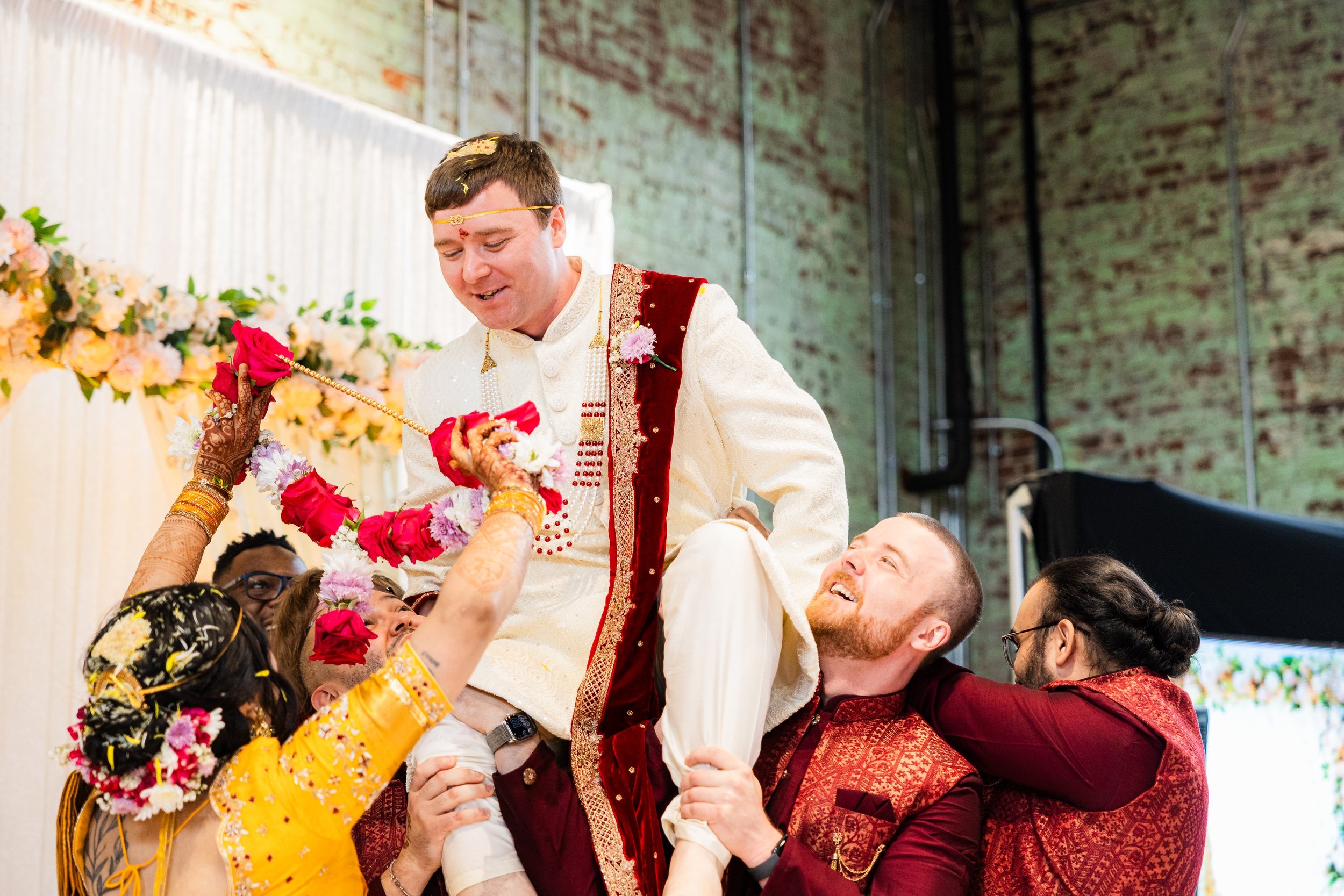
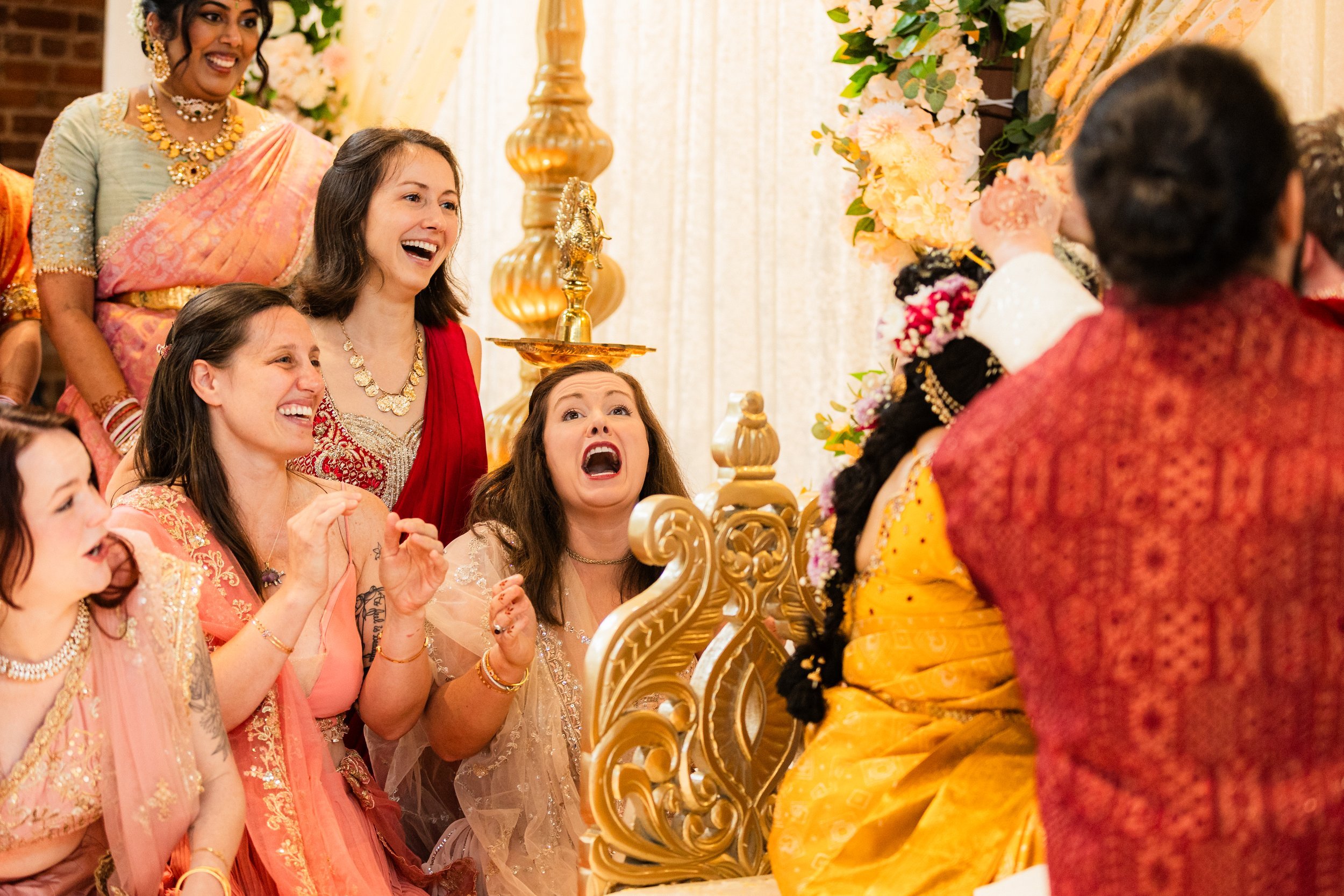
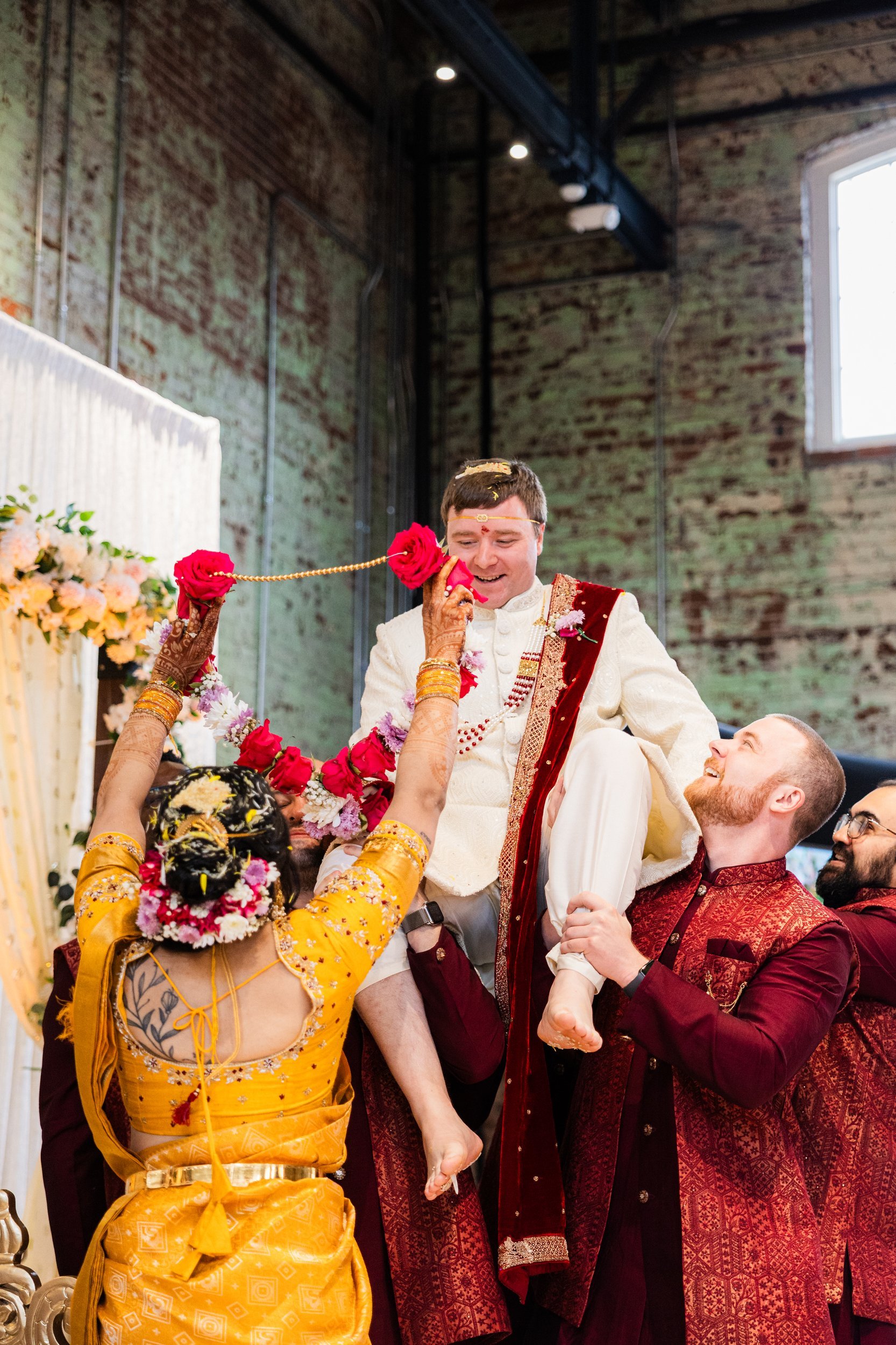
About halfway through Harini and Allan's ceremony, the priest asked for a garland exchange. That sounds simple. It is not. Allan's groomsmen grabbed him by the legs and hoisted him into the air so Harini couldn't reach his neck. Her bridesmaids answered by trying to lift her too. For about a minute the whole stage was a pile of burgundy sherwanis, pink lehengas, flowers, and people laughing so hard they couldn't stand up straight. Nobody posed for that. Nobody could have.
That's the thing I want you to know before you plan an Indian wedding. The traditions are beautiful and serious, and they're also full of play. Your job is to plan the day well enough that everyone can relax into both.
Harini and Allan got married on May 24, 2026, in Greenville. It was a Hindu ceremony in the morning, a second ceremony right after for Allan's side, and an evening reception. Here's what that day looked like, and what I'd tell any couple planning something similar in the Upstate.
Start with the muhurtham and build everything around it
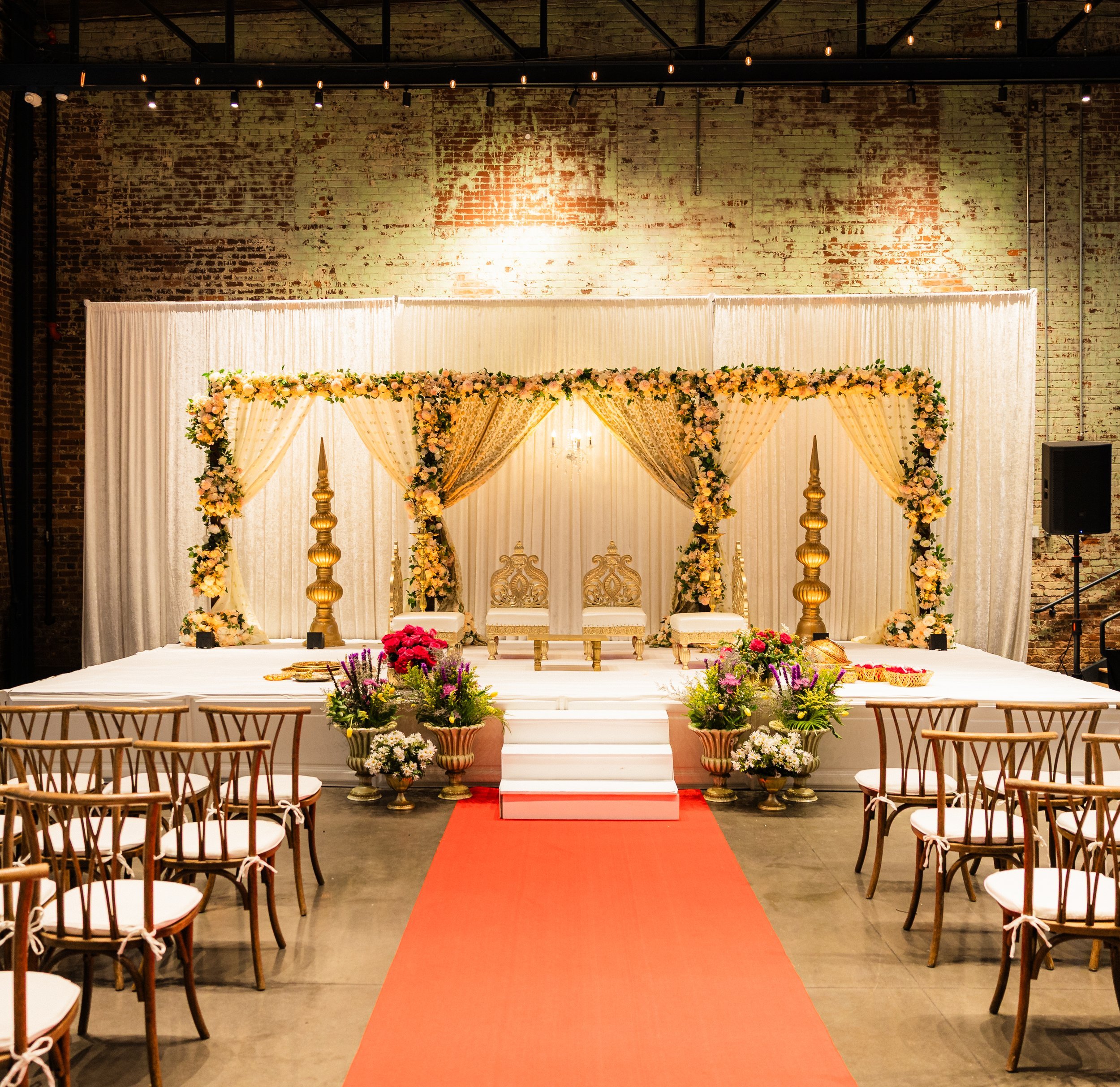
Most Hindu weddings are built around the muhurtham, the auspicious time your family and priest choose for the moment of marriage. For Harini and Allan, that time was in the morning. So the day started early. I was there before 8am, and the mandap was already glowing.
Here's the honest part. When your ceremony time is set by the stars and not by the sunset, everything else has to bend around it. Hair and makeup for the bride and her mom. Getting the groom's family dressed and lined up for the baraat. Breakfast for guests who drove in from out of town. Work backward from the muhurtham first, then fill in the rest. Don't do it the other way around.
The morning: getting ready
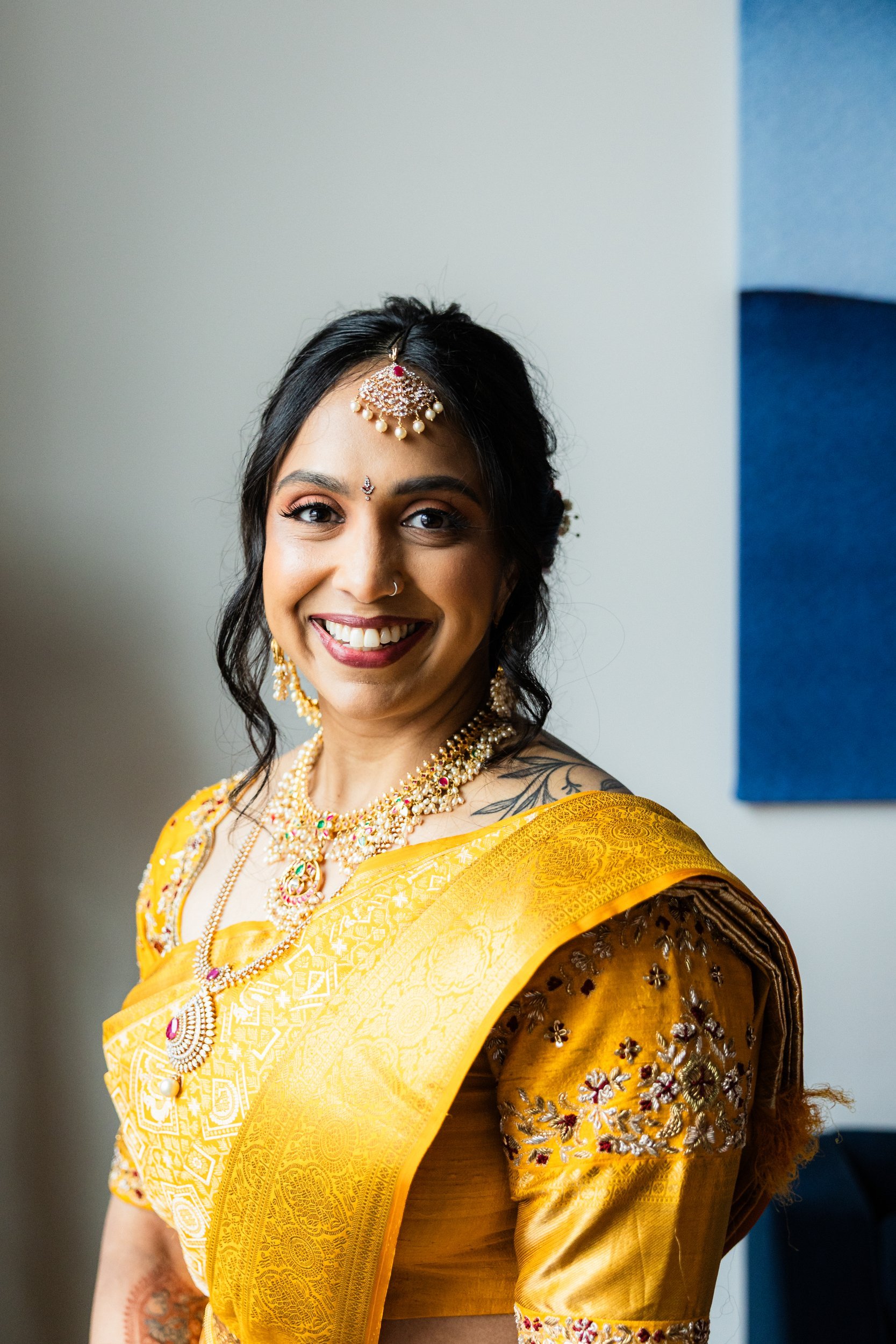
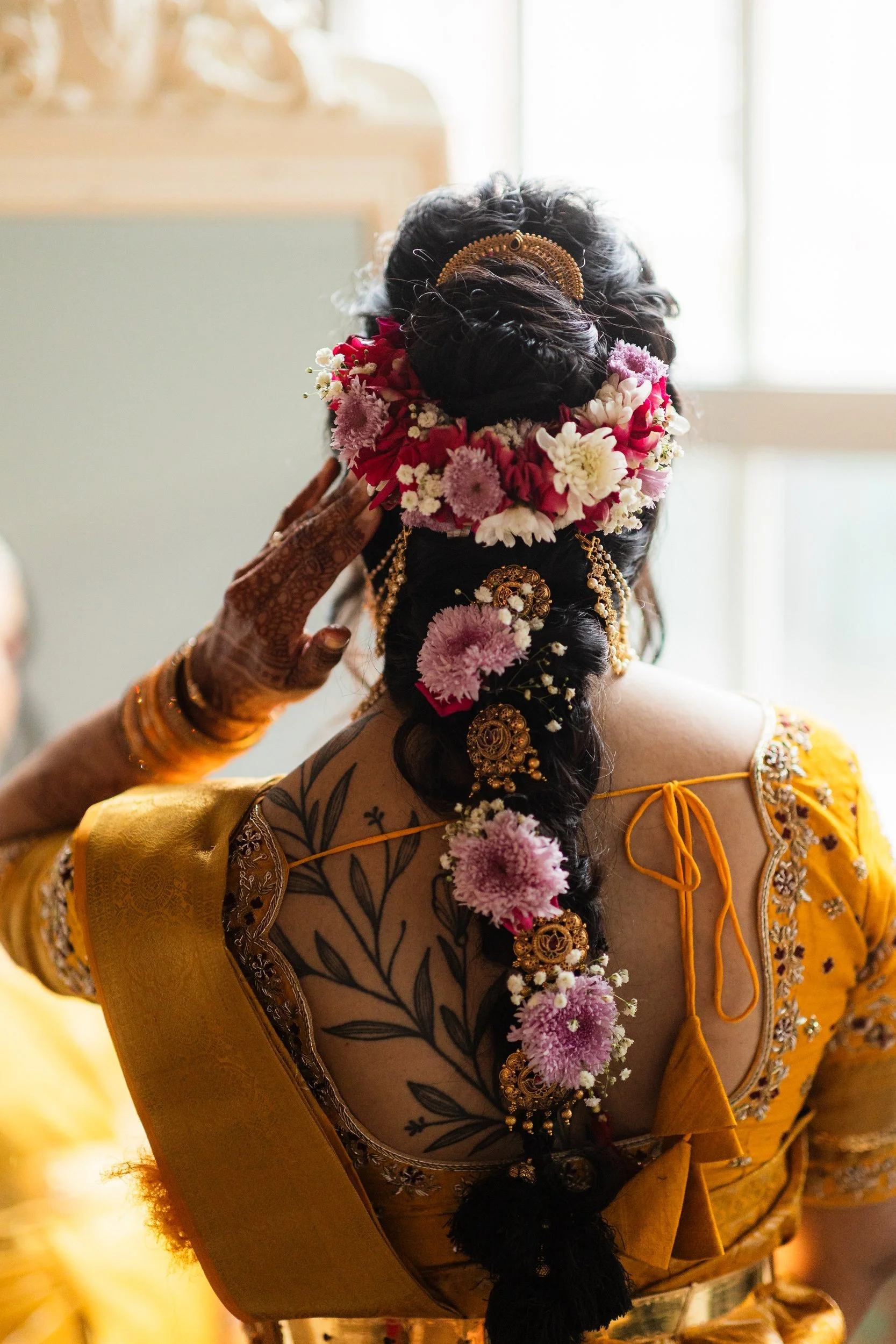
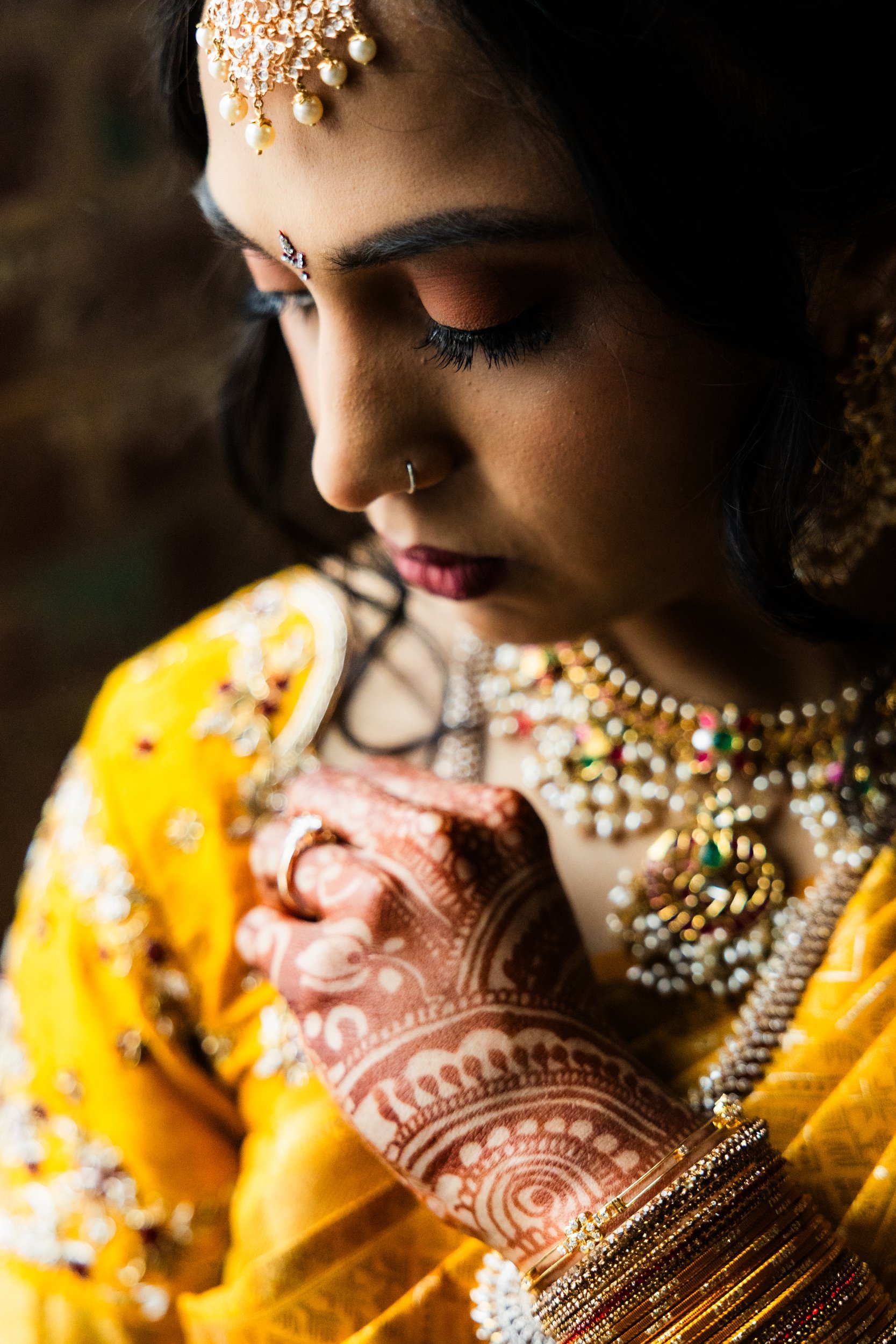
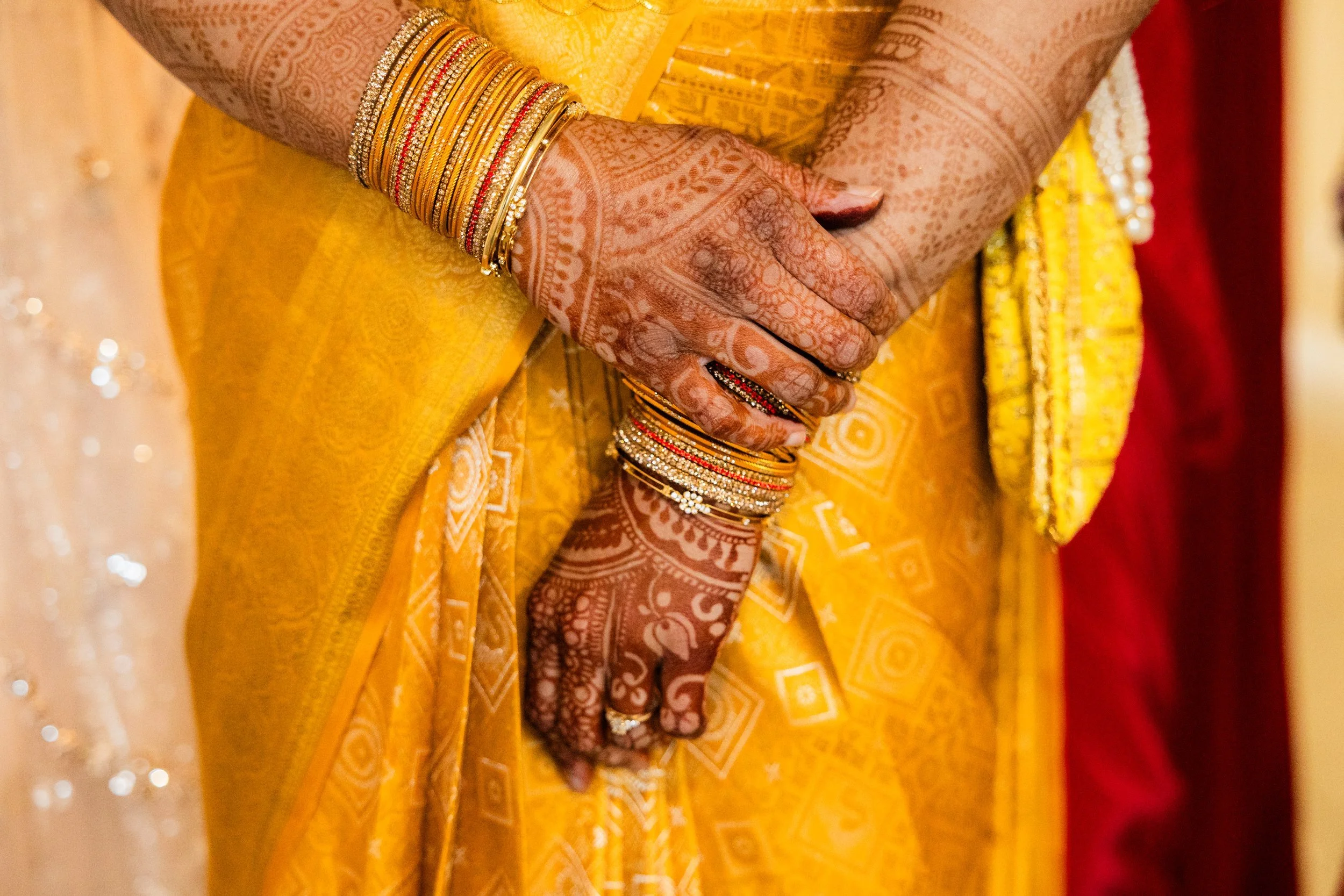
Harini got ready in a gold silk saree with temple jewelry, jasmine and roses braided down the length of her hair, and mehndi up to her elbows. Her friends crowded into a hallway to fix her pleats and pin her saree, all of them talking at once.
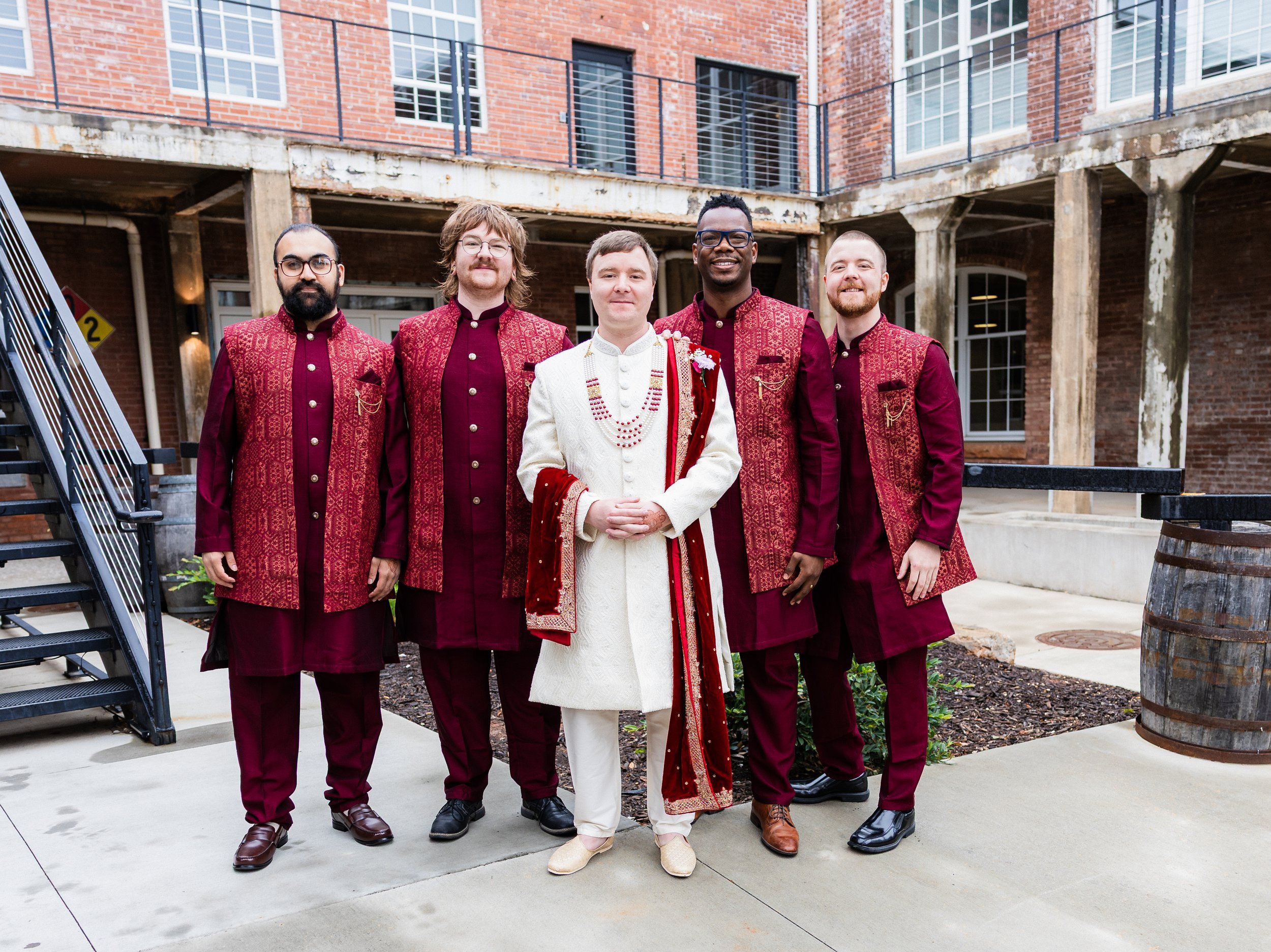
Allan wore an ivory sherwani with a deep red dupatta and layers of pearls. His mom helped pin his dupatta. His guys were all in matching burgundy, and none of them could stand still.
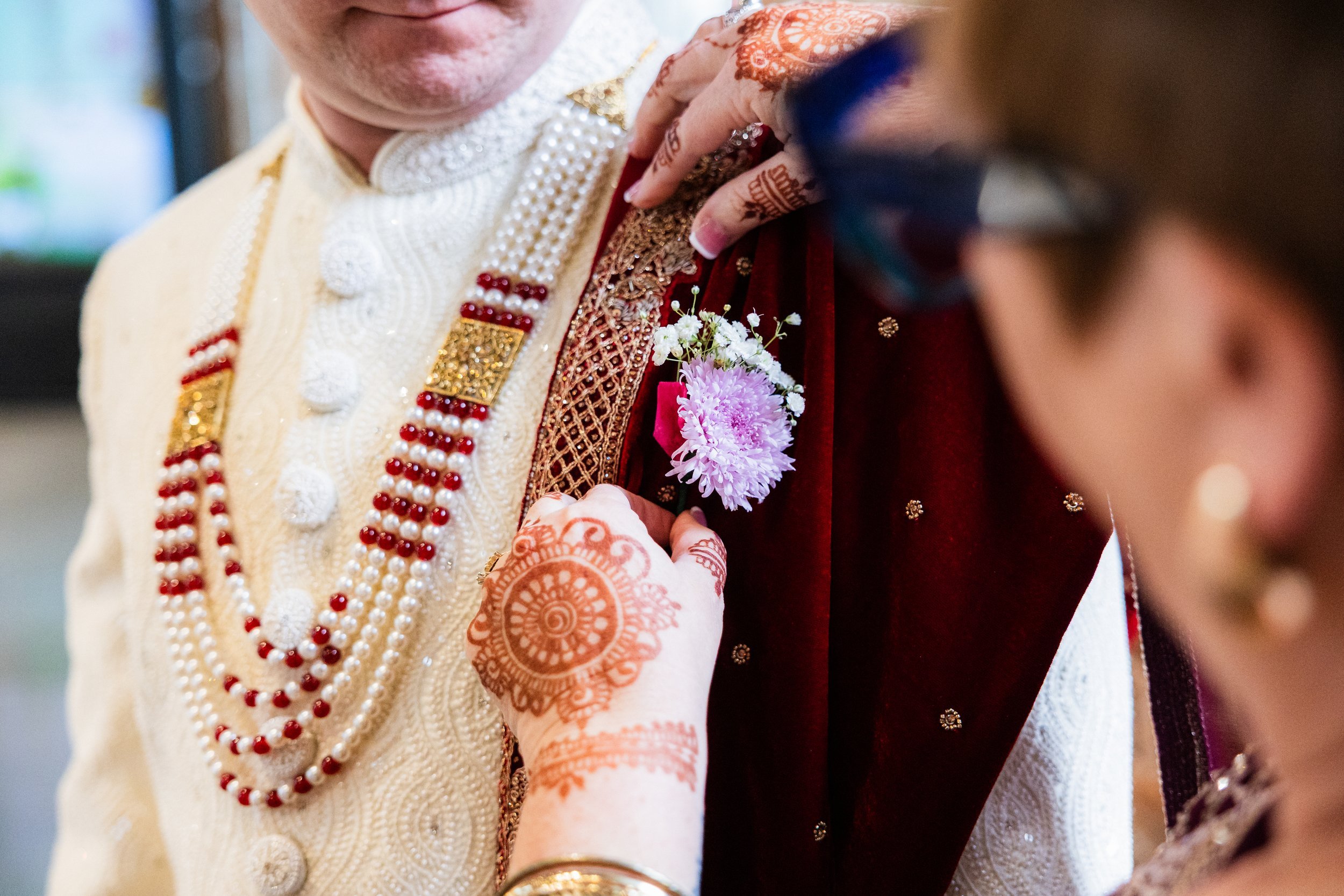
If you have two families coming from different traditions, like Harini and Allan did, this is a great time for small moments. Allan's mom wore a lehenga for the day, with a little help pinning her dupatta just right. That's the kind of thing that doesn't show up on a timeline but shows up in your gallery.
The baraat (and yes, there was a red Mustang)
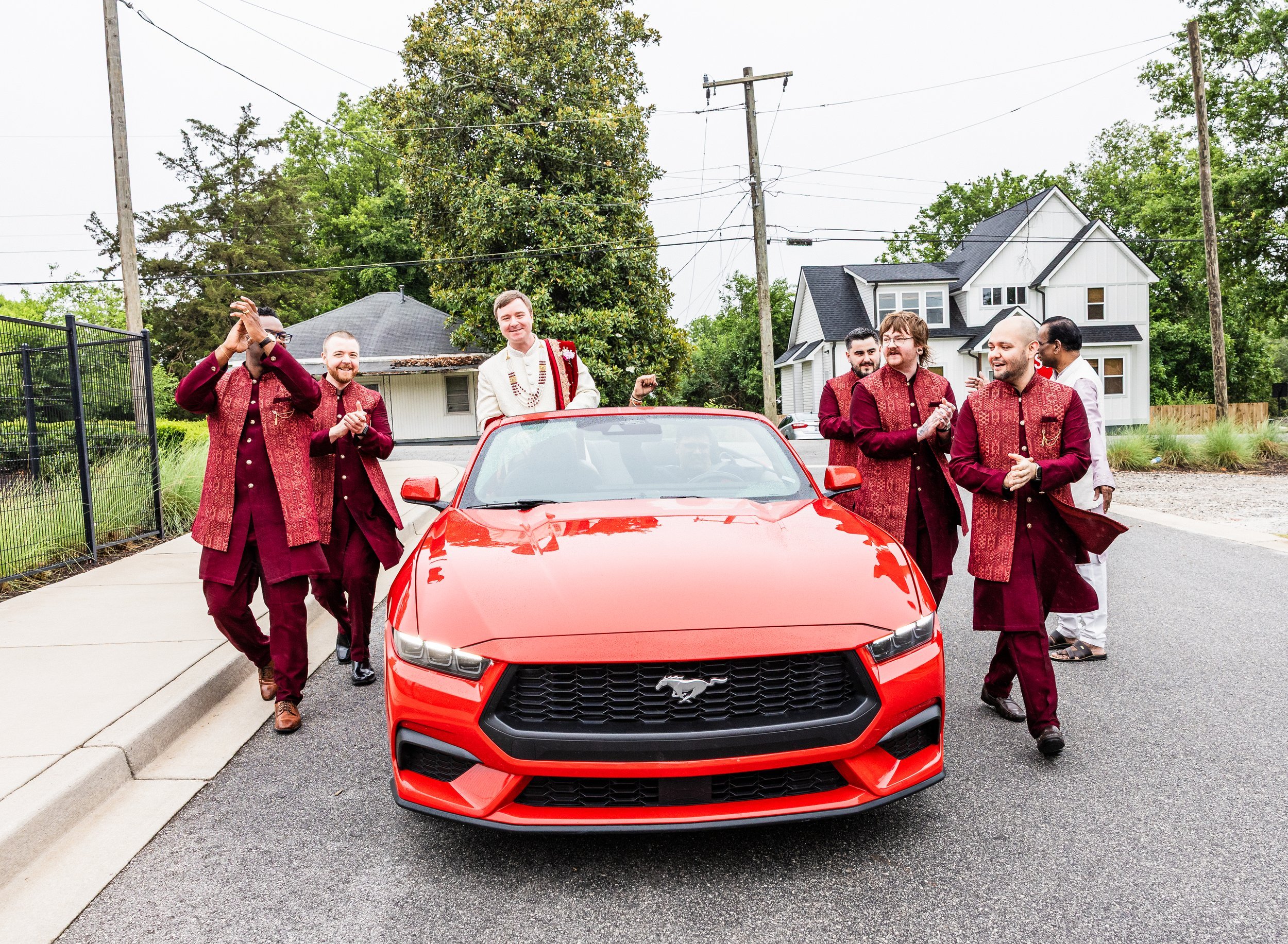
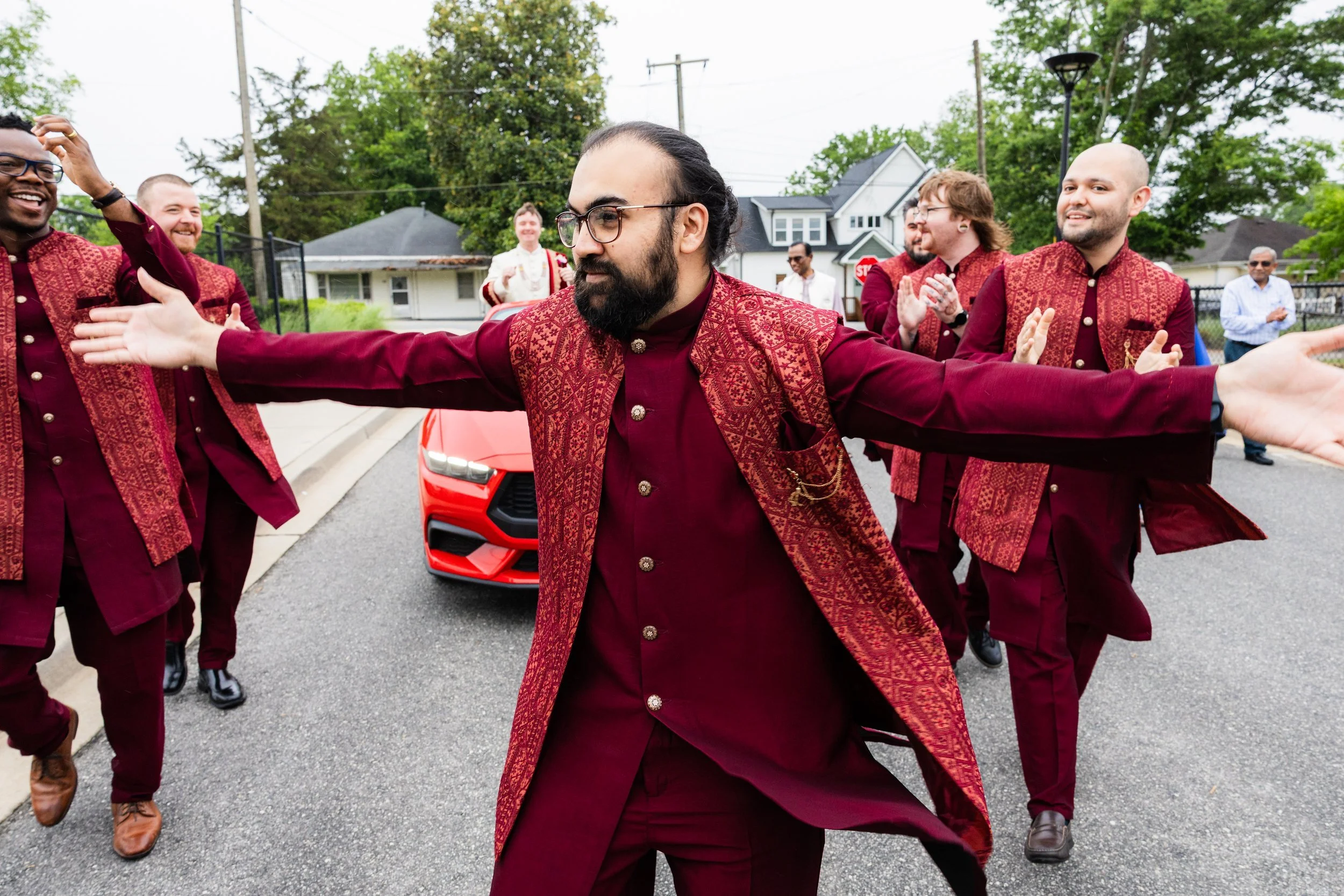
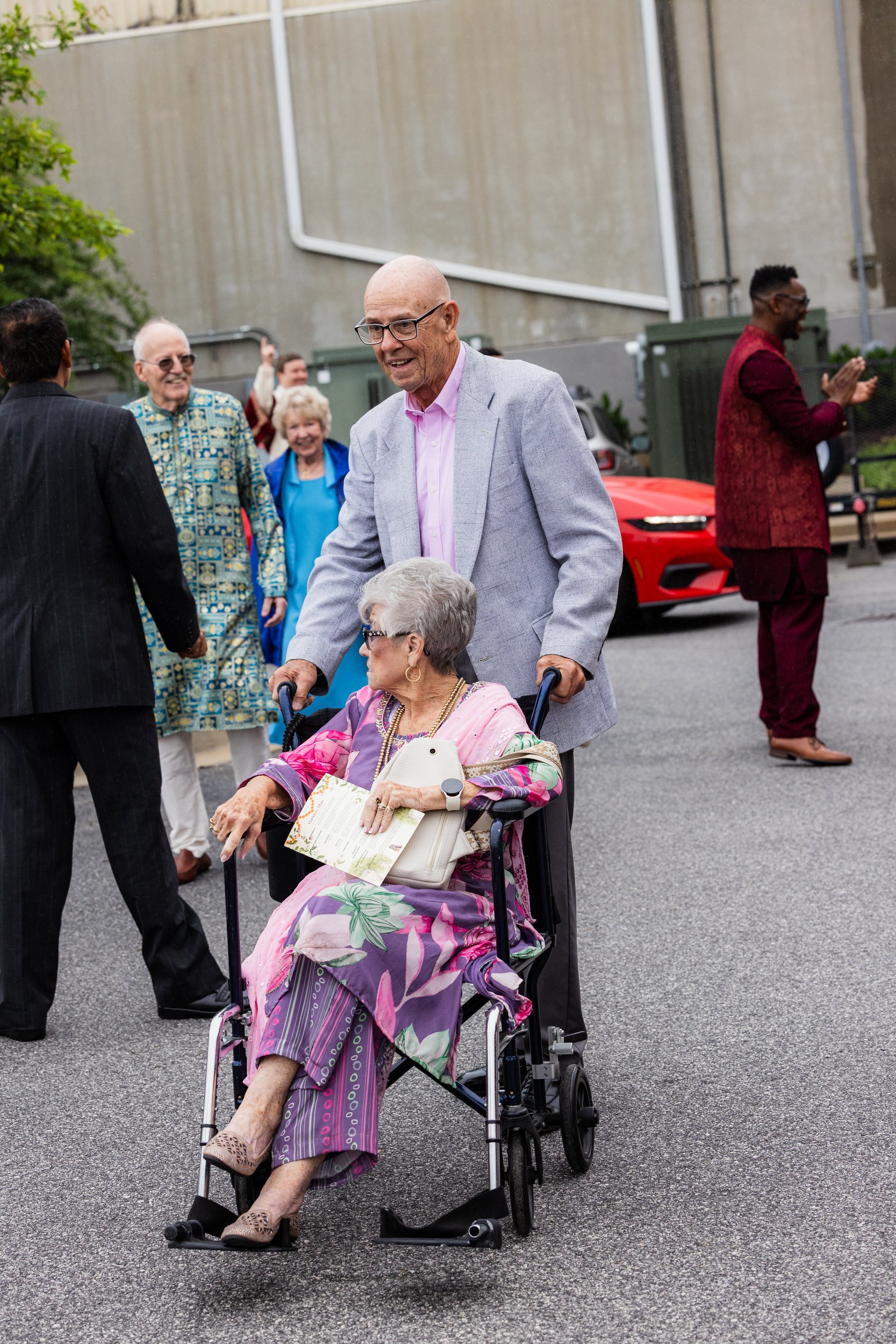
The baraat is the groom's procession to the ceremony, and it's loud on purpose. Allan's family and friends danced him in, with Allan riding standing up in a red Mustang convertible while his groomsmen danced in the street beside him. His mom danced. His grandmother came along in her wheelchair. Harini's family met them at the door to welcome them in.
If you're planning a baraat in Greenville, a few things to sort out early:
Ask your venue exactly where the procession can go. Some venues are fine with a street or parking lot procession, others have rules about music, vehicles, or neighbors. Find out before you book a horse, a car, or a dhol player.
Give it more time than you think. Baraats always run long because everybody is having fun. That's fine. Just don't put the muhurtham fifteen minutes after it.
Tell your photographer who's arriving with the groom. I want to catch his grandparents coming in, not just the guys dancing.
The Hindu ceremony
Harini and Allan put a printed program on every chair that walked guests through each part of the ceremony. I can't recommend this enough. Half their guests had never been to a Hindu wedding, and you could see them reading along, looking up, and actually understanding what they were watching. It turns a room full of polite spectators into people who feel like they're part of it.
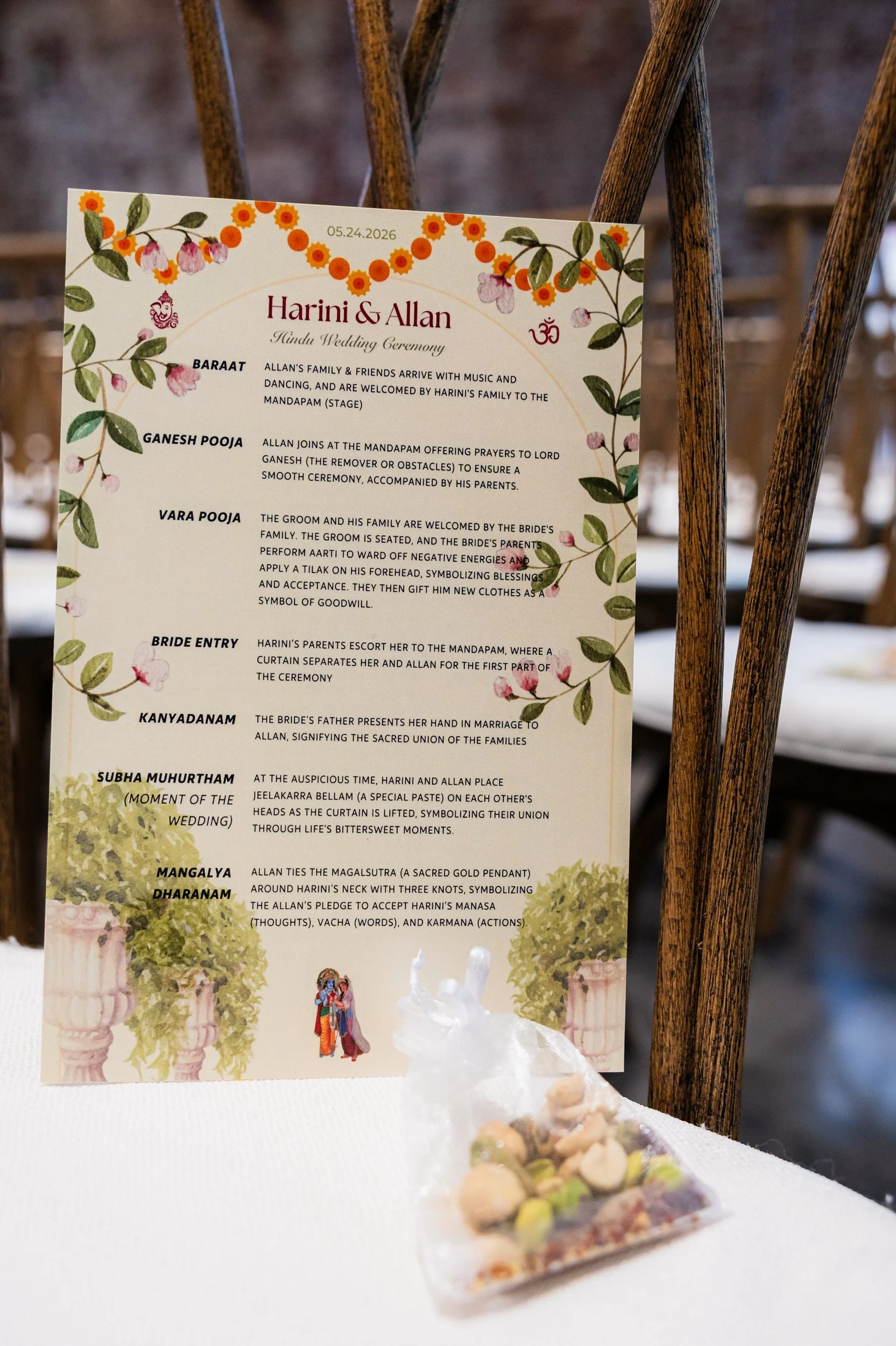
Here's how their ceremony flowed, in their own program's order:
Ganesh Pooja. Allan sat at the mandap with his parents and offered prayers to Lord Ganesh, the remover of obstacles. His parents sat right there with him, learning along the way.
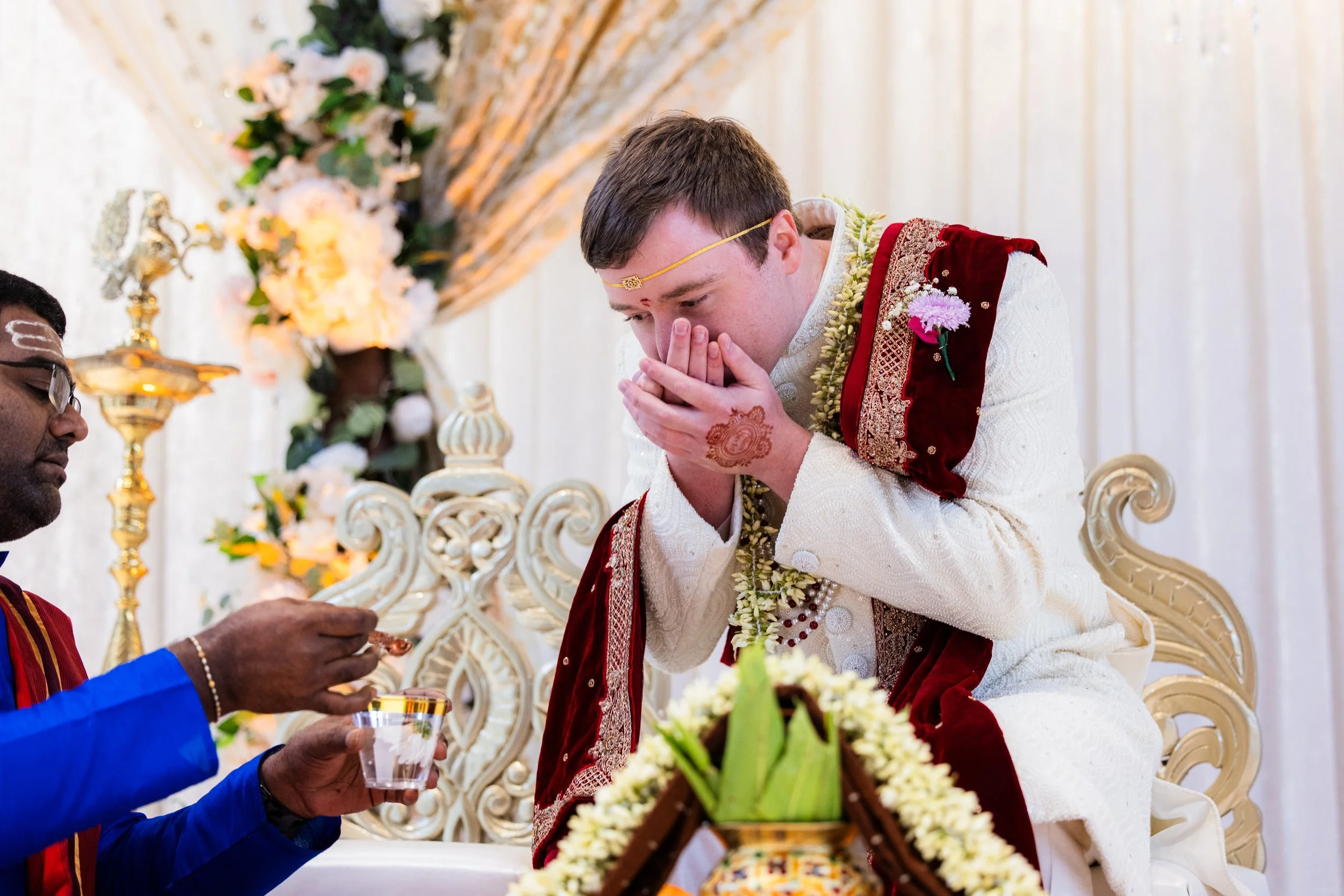
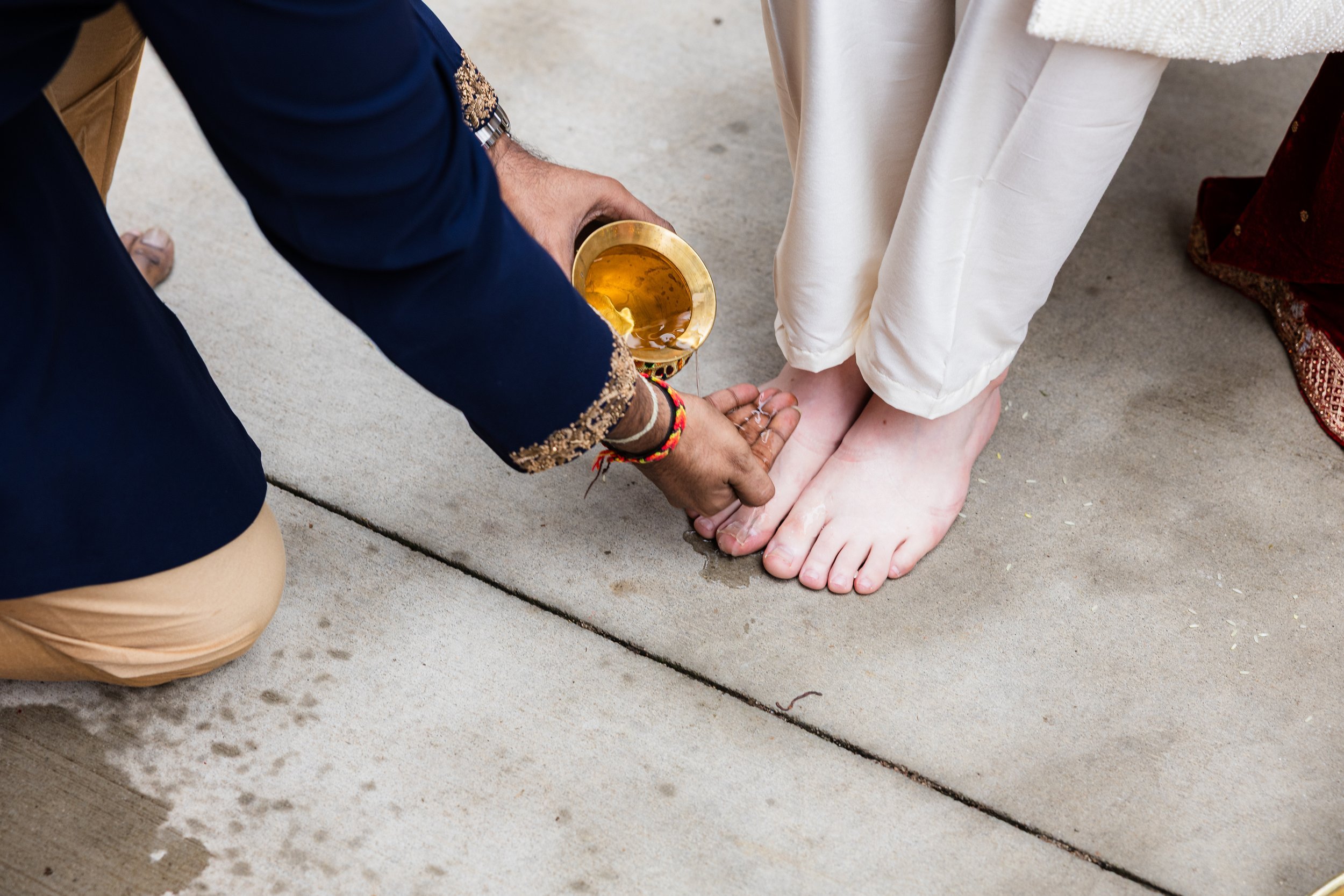
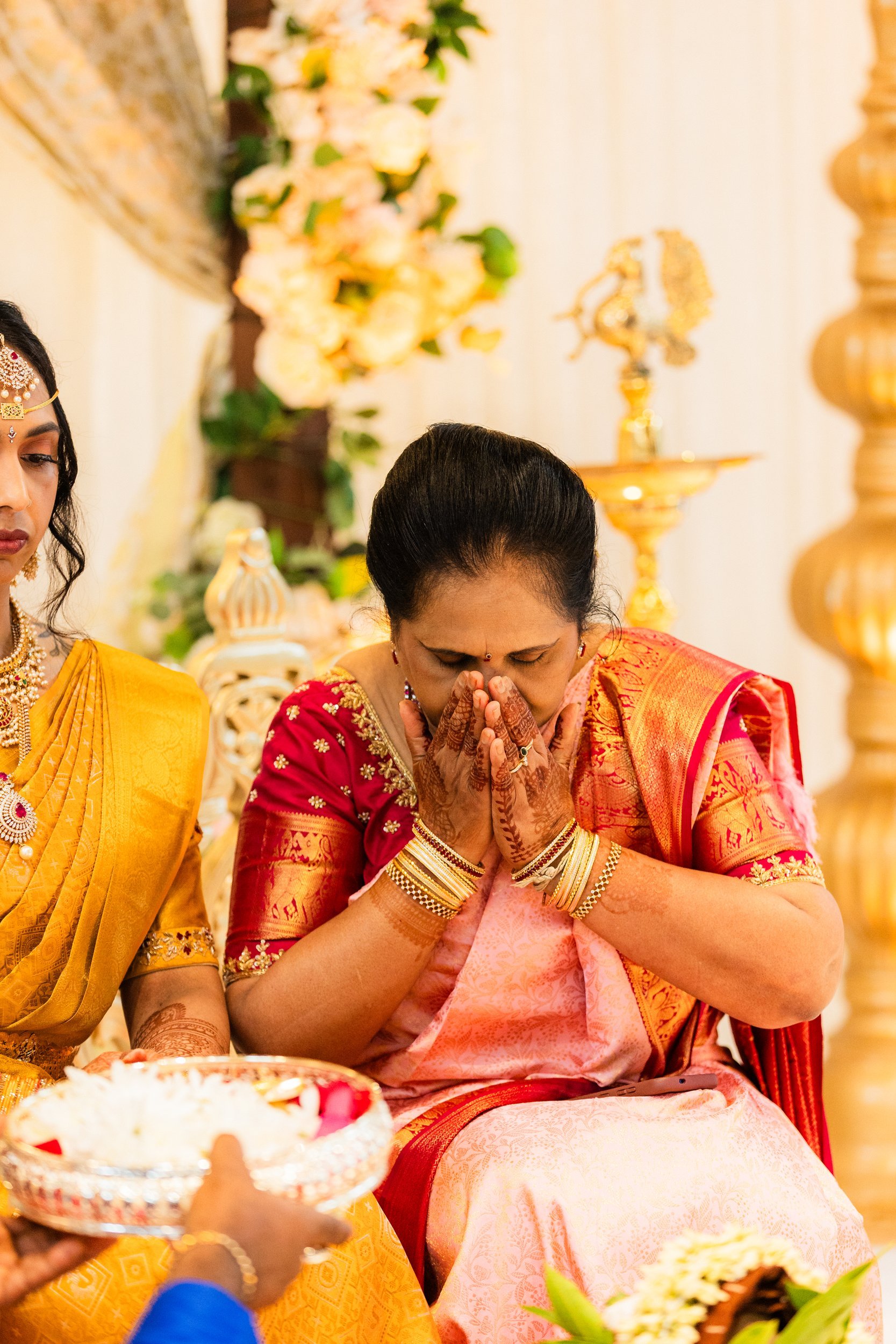
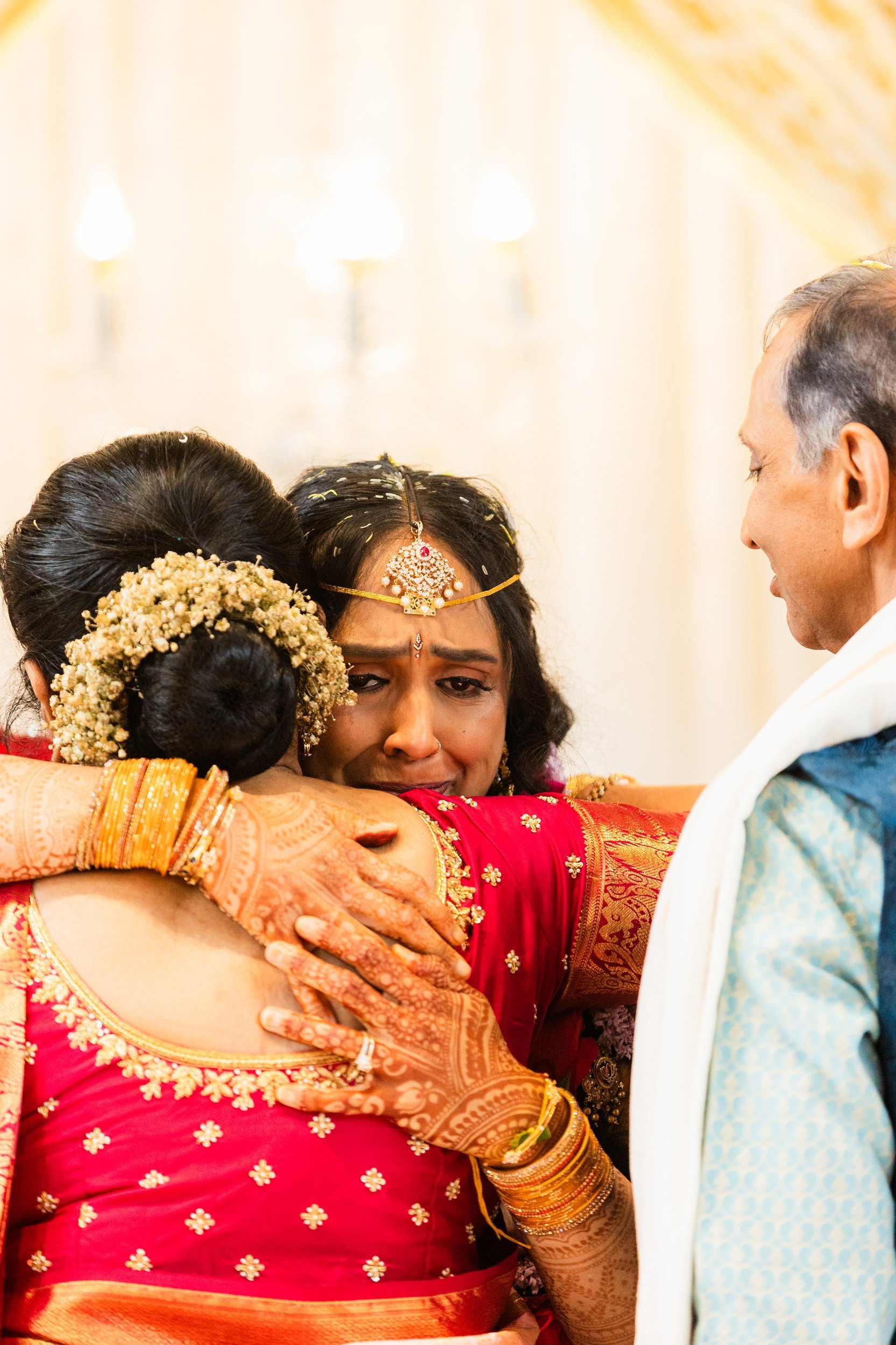
Vara Pooja. Harini's parents welcomed Allan into the family. They performed aarti, put a tilak on his forehead, and washed his feet. I watched Allan's face during this part. He was trying very hard to take it seriously and also smiling the whole time. Harini's dad prayed with his hands pressed together and his eyes closed, and at one point her mom covered her face with both hands. That's the photo.
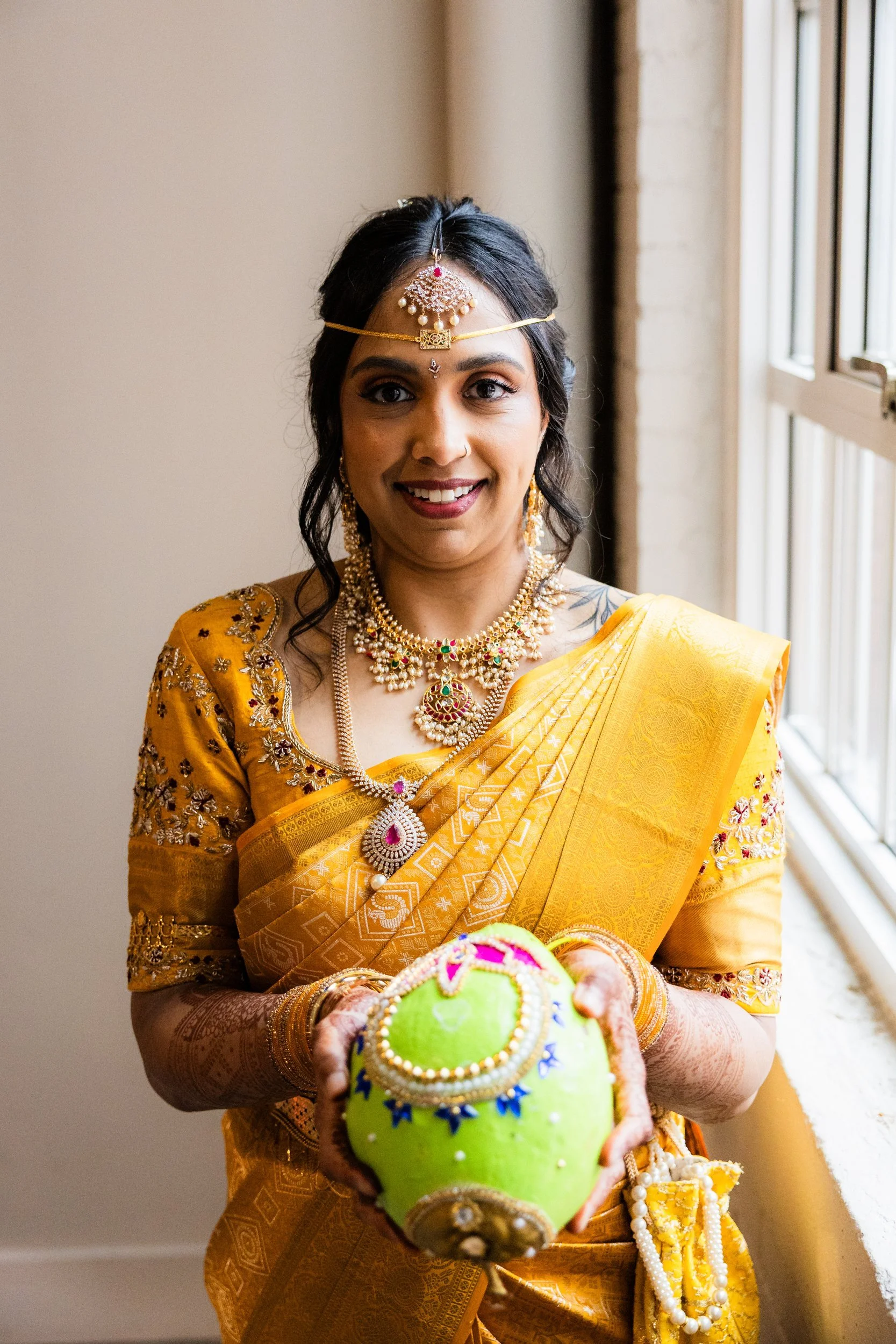
Bride entry. Harini came in carrying a decorated coconut, escorted by her parents. A painted curtain was held up between her and Allan, so they couldn't see each other for the first part of the ceremony.
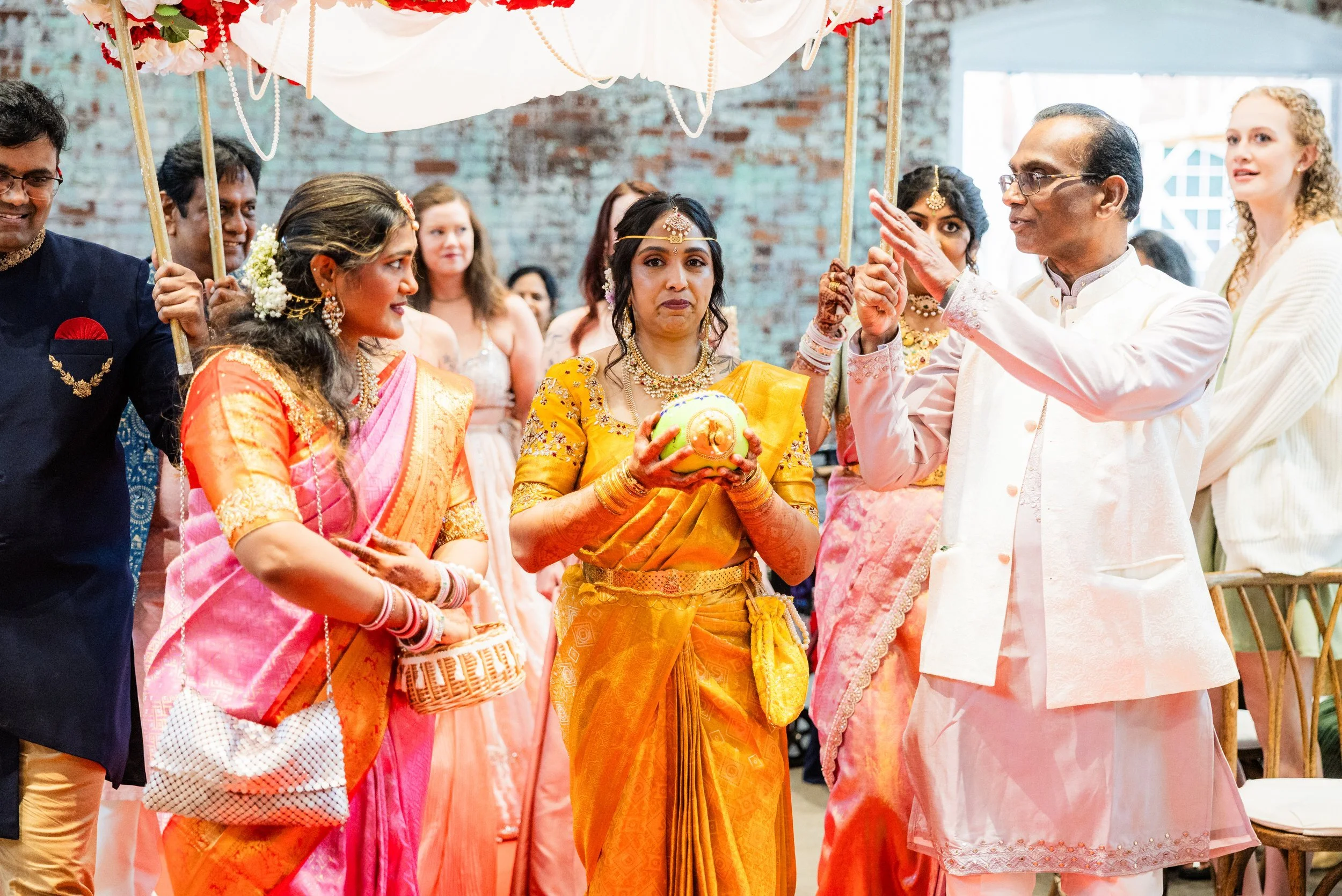
Kanyadanam. Harini's father presented her hand in marriage to Allan, the moment their program described as the union of the two families.
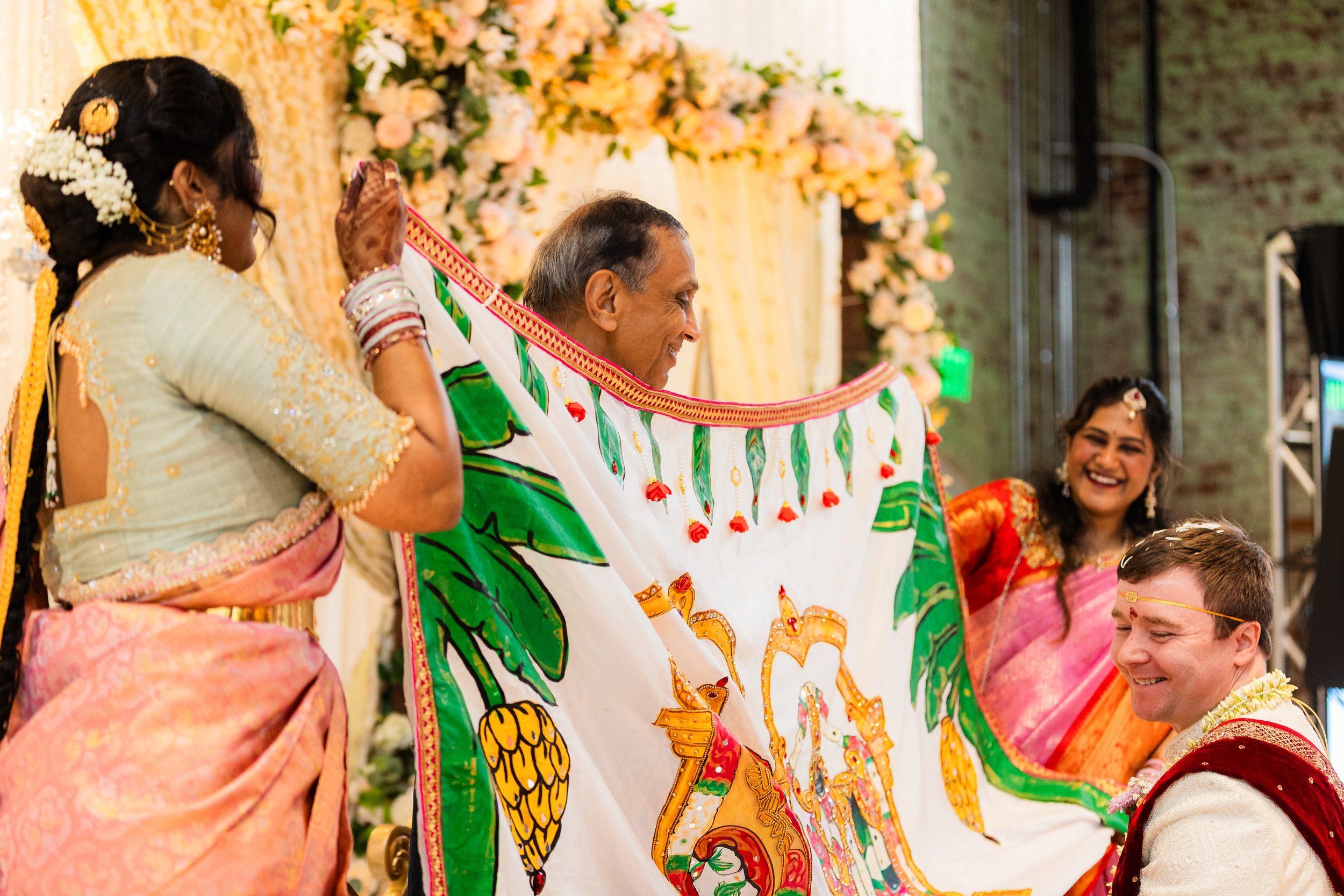
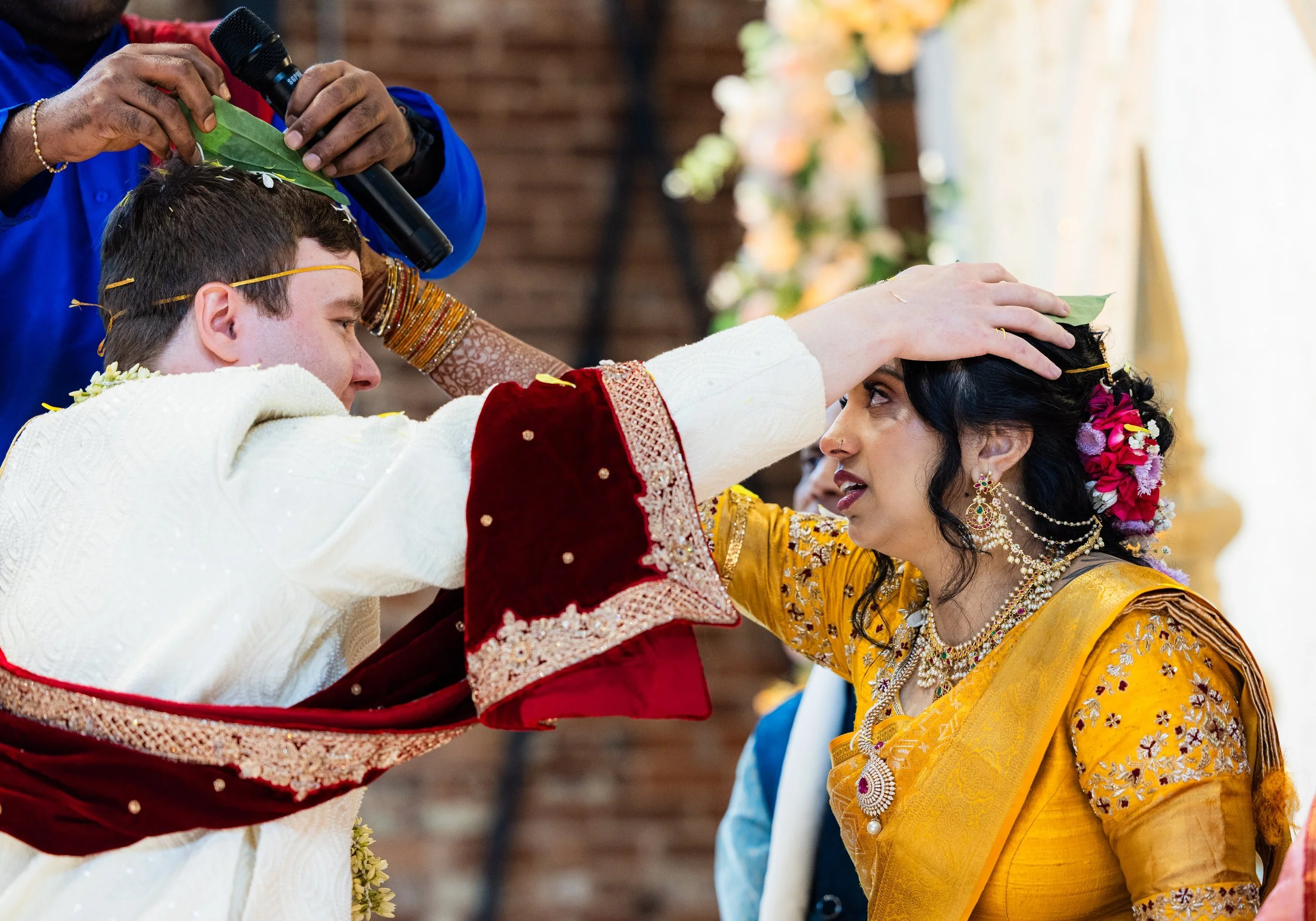
Subha Muhurtham. At the auspicious time, the curtain dropped and Harini and Allan placed jeelakarra bellam, a paste of cumin and jaggery, on each other's heads. It symbolizes sticking together through the sweet and the bitter. It's also the first time they saw each other that day.
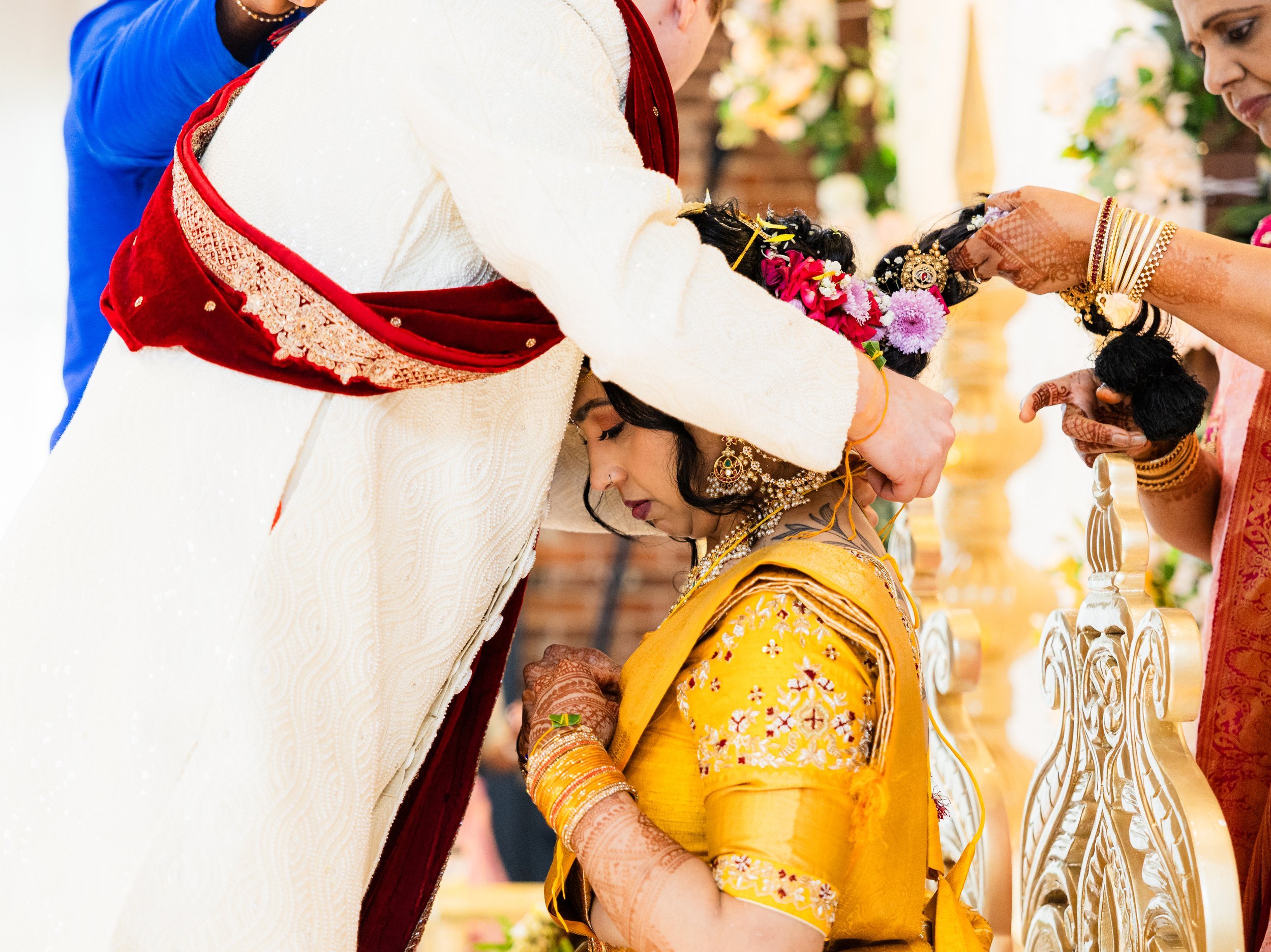
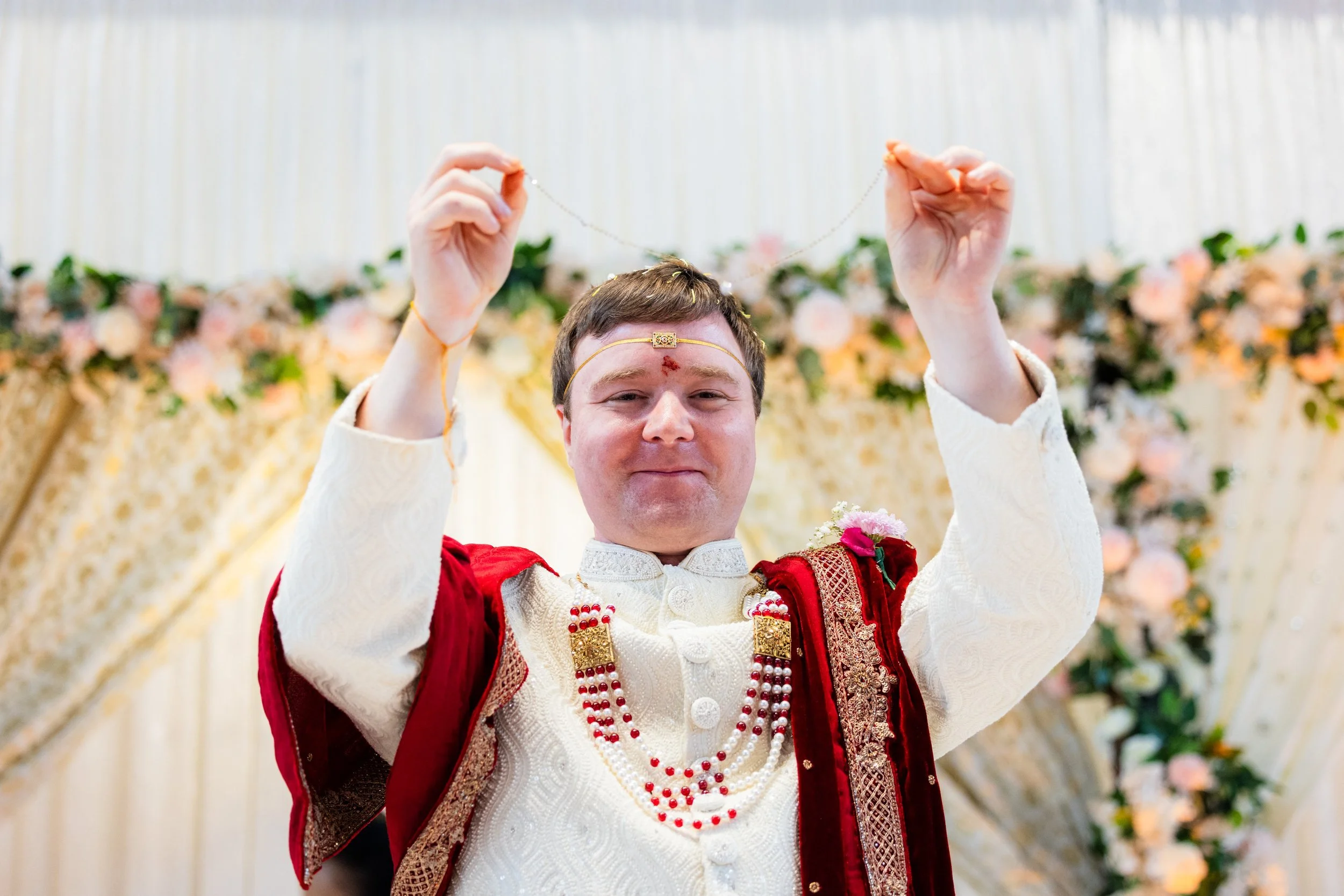
Mangalya Dharanam. Allan tied the mangalsutra around Harini's neck with three knots while her mom and her friends helped. Then he threw his arms in the air like he'd just won something. Honestly, he had.
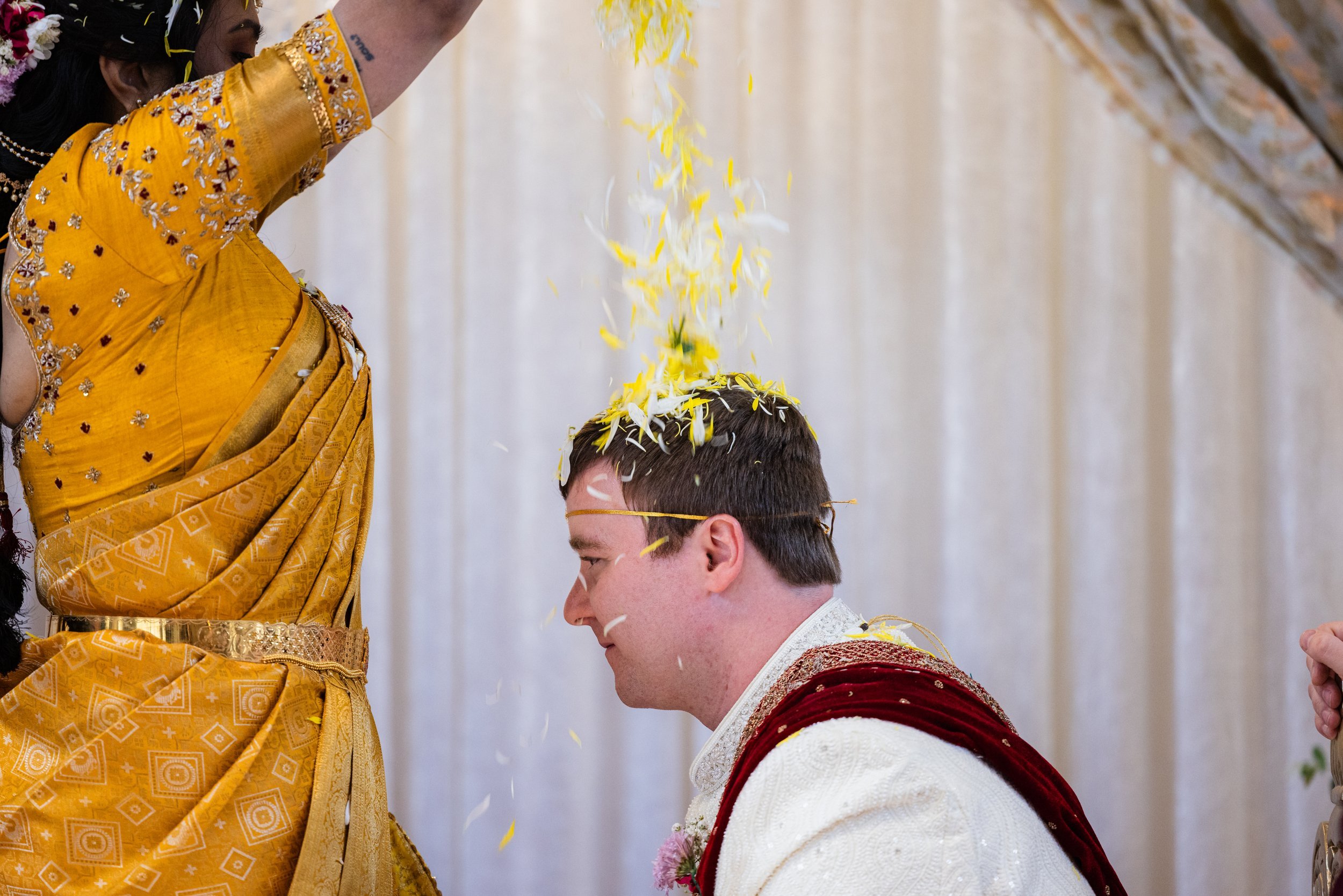
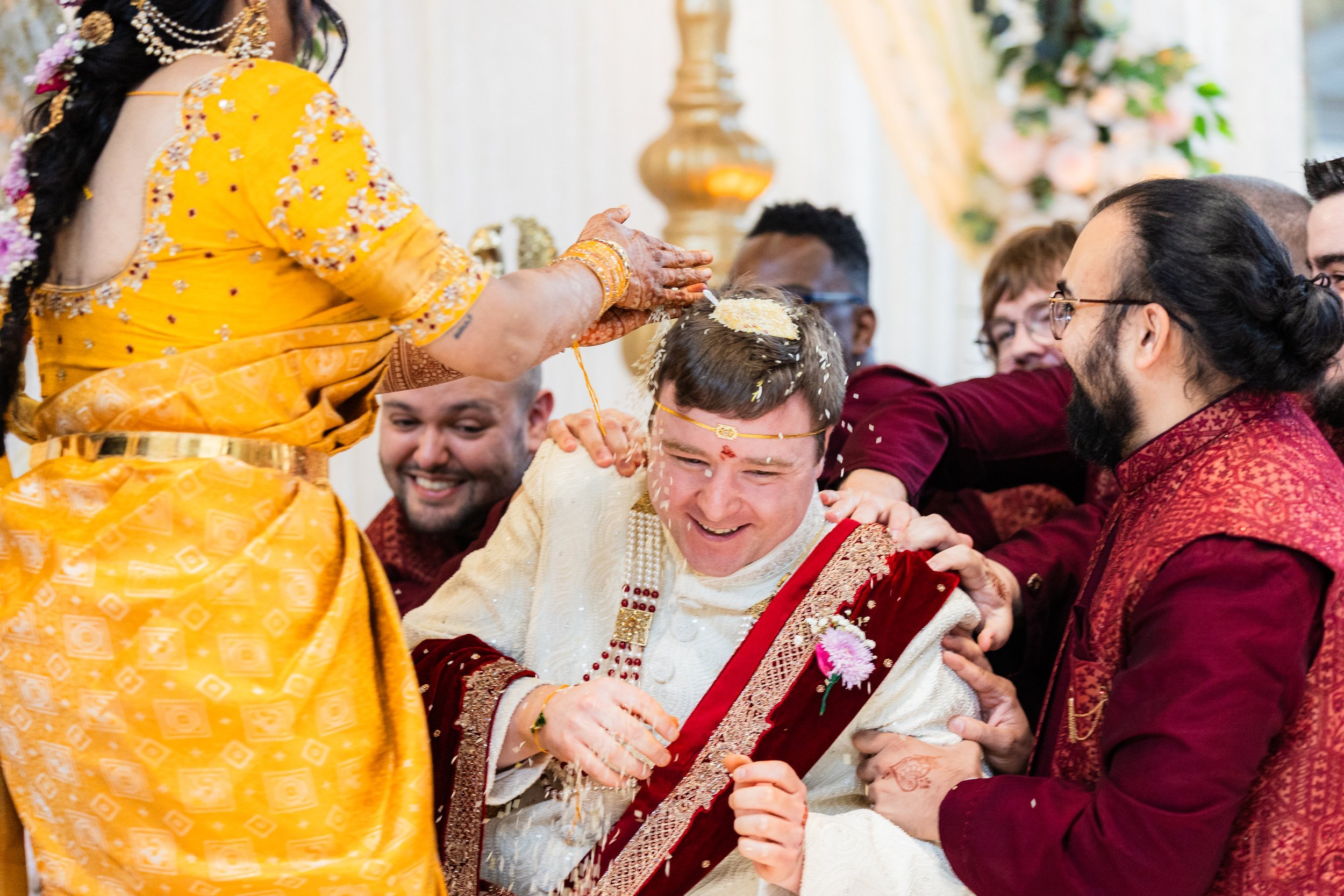
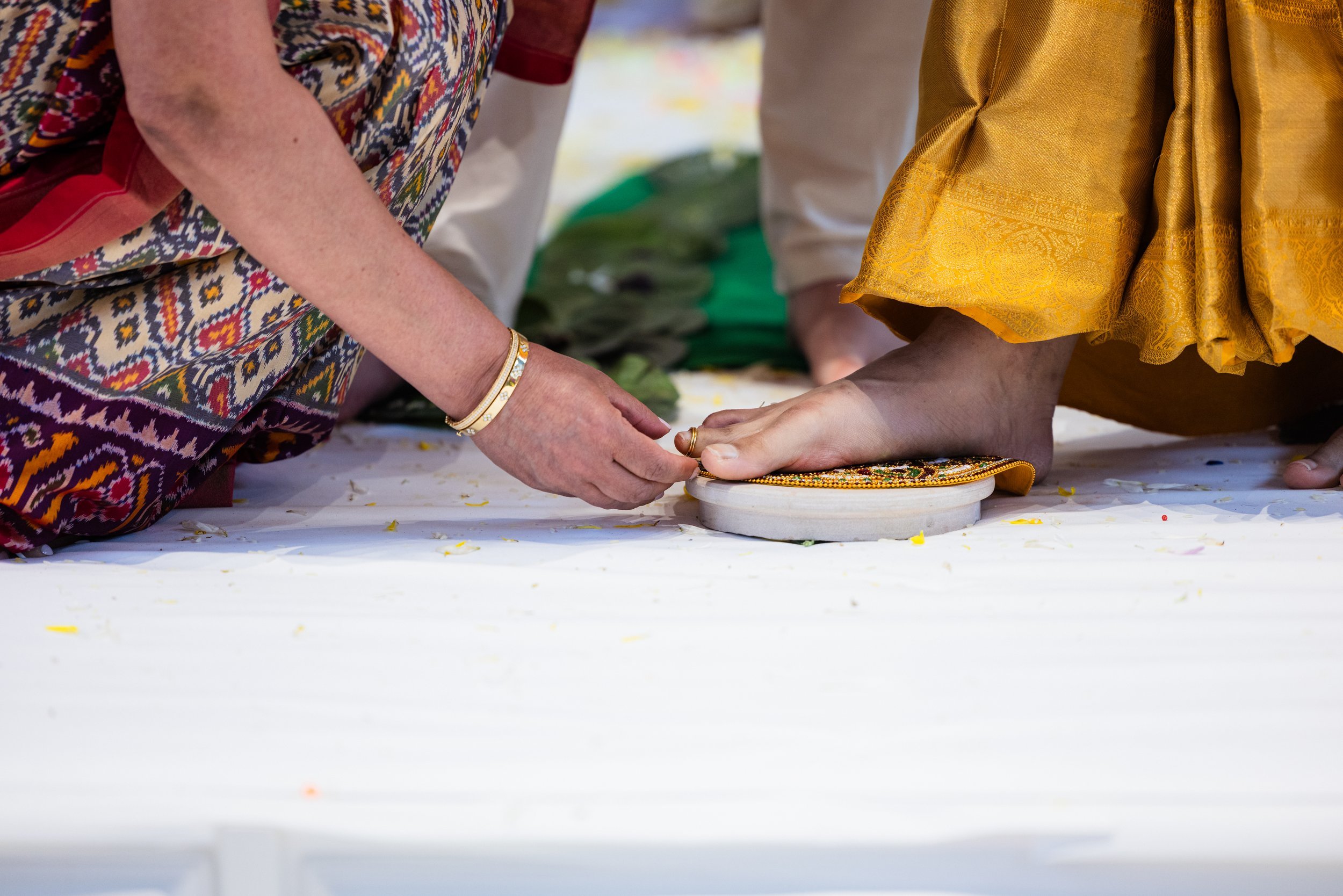
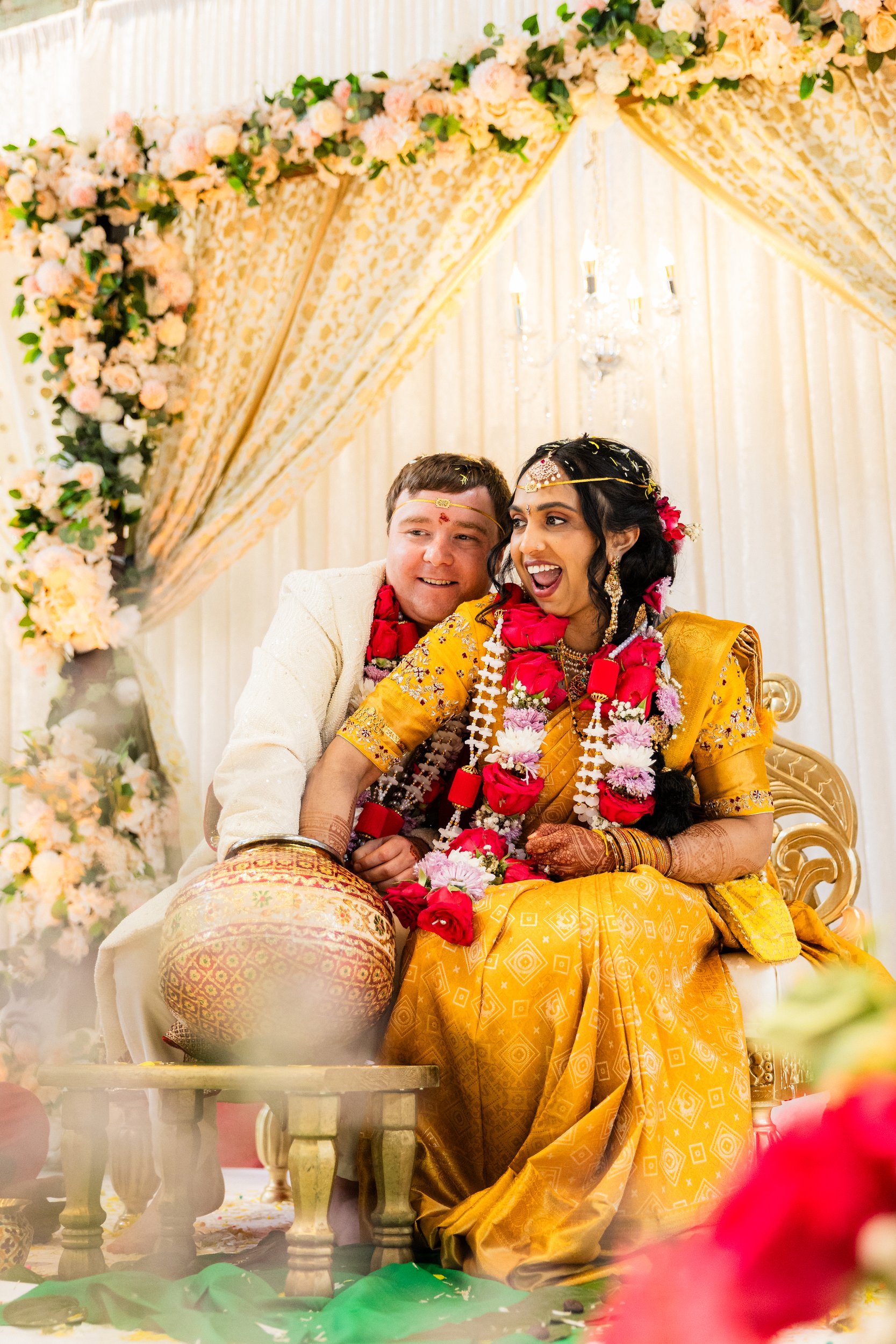
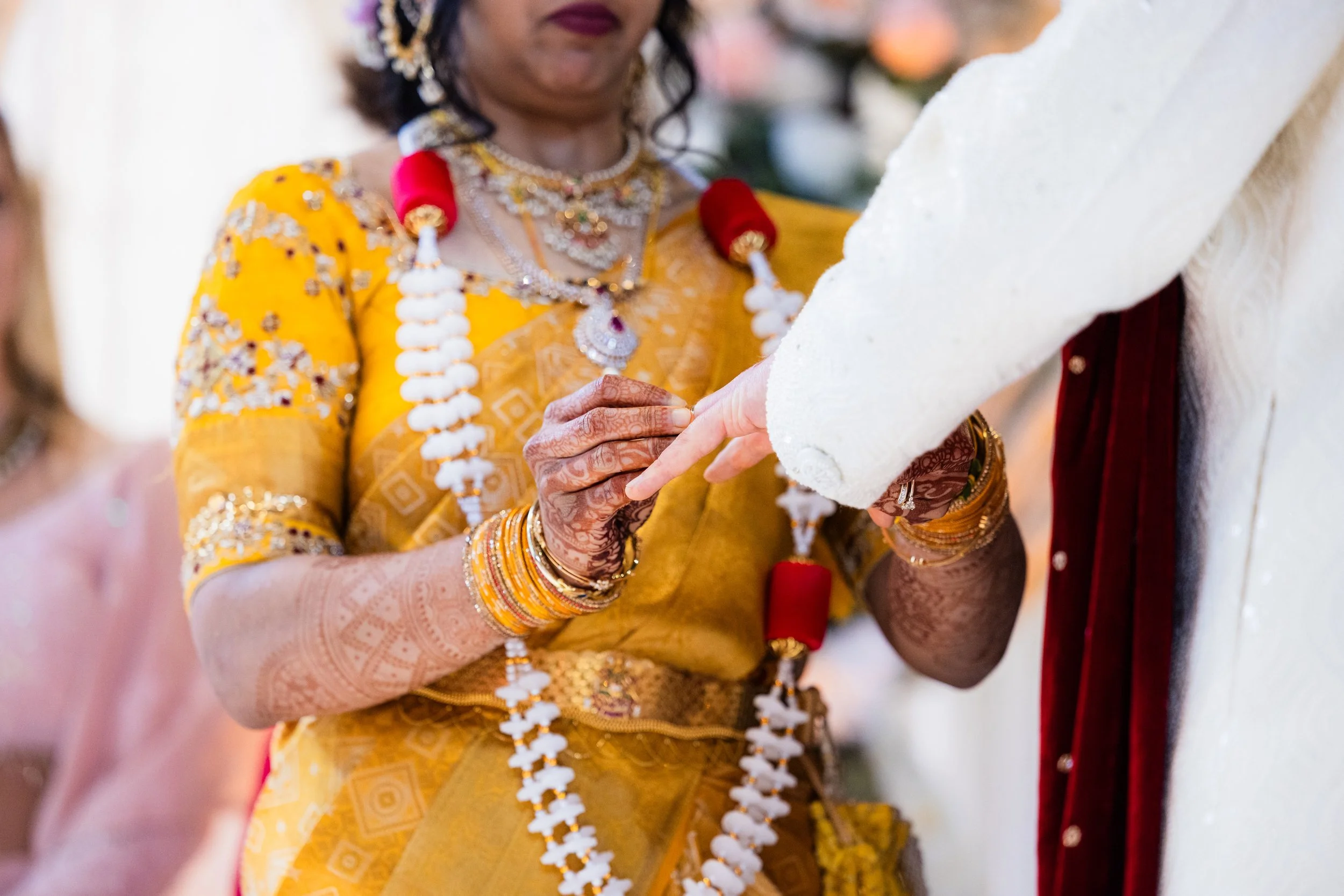
After that came the fun stuff. They showered each other with yellow rice, both of them laughing and trying to get more on the other one. Then came the garland exchange, with the lifting I told you about at the top. Then toe rings for Harini, and the game where the couple dig through a pot for a ring and everyone cheers for whoever finds it first. Then blessings from both families, with Allan's parents tossing rice and hugging everyone in sight.
Then a second ceremony, right on the same stage
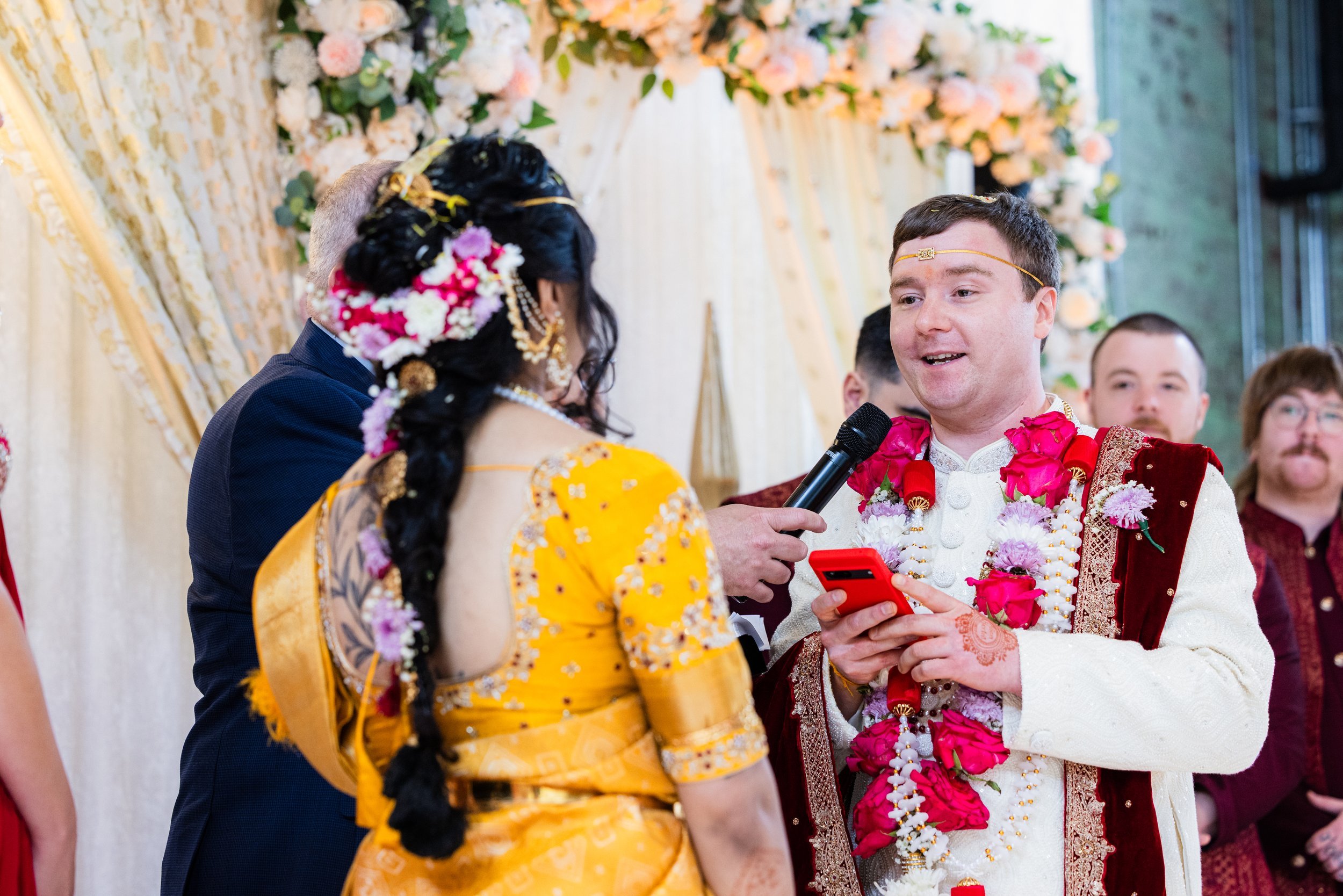
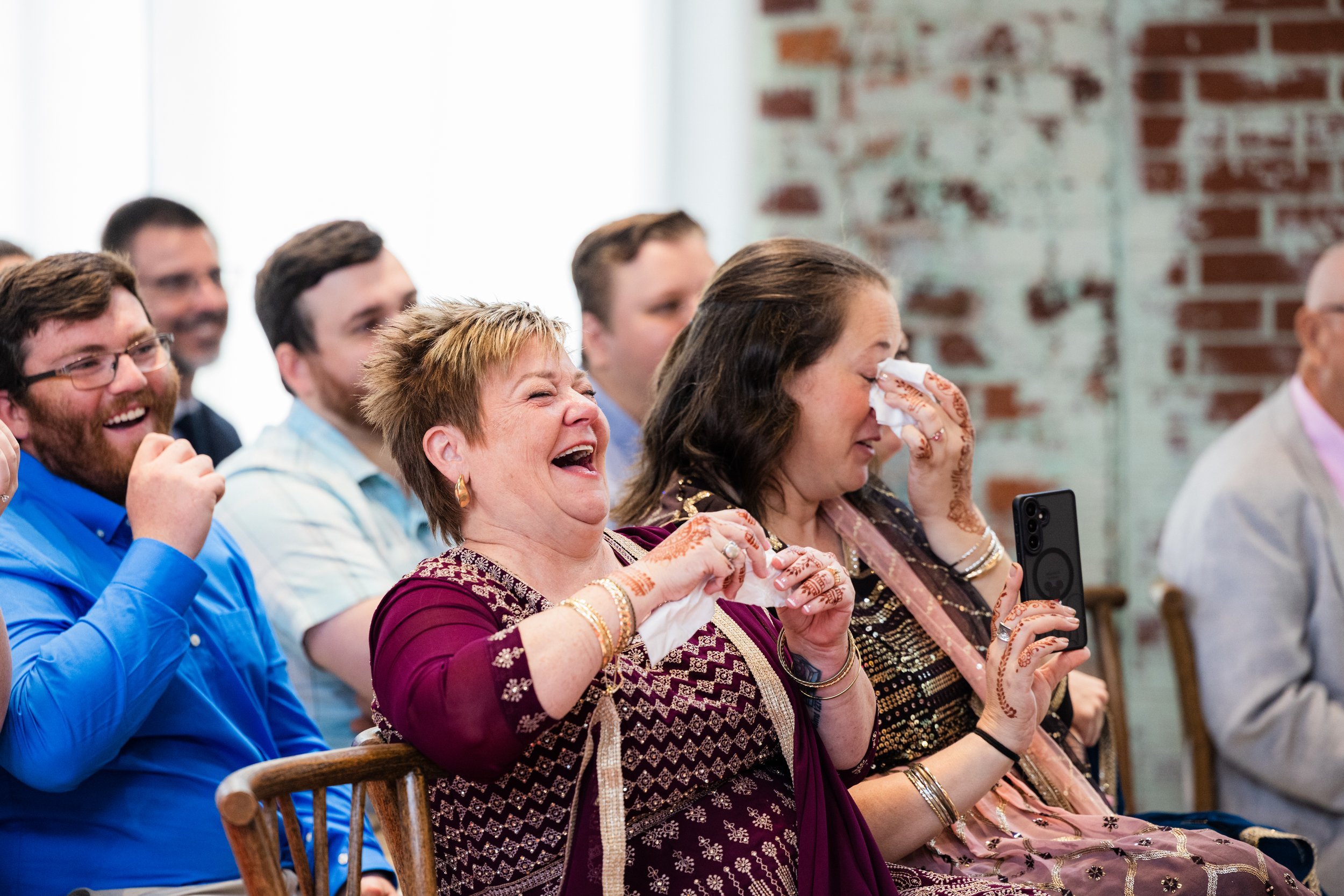
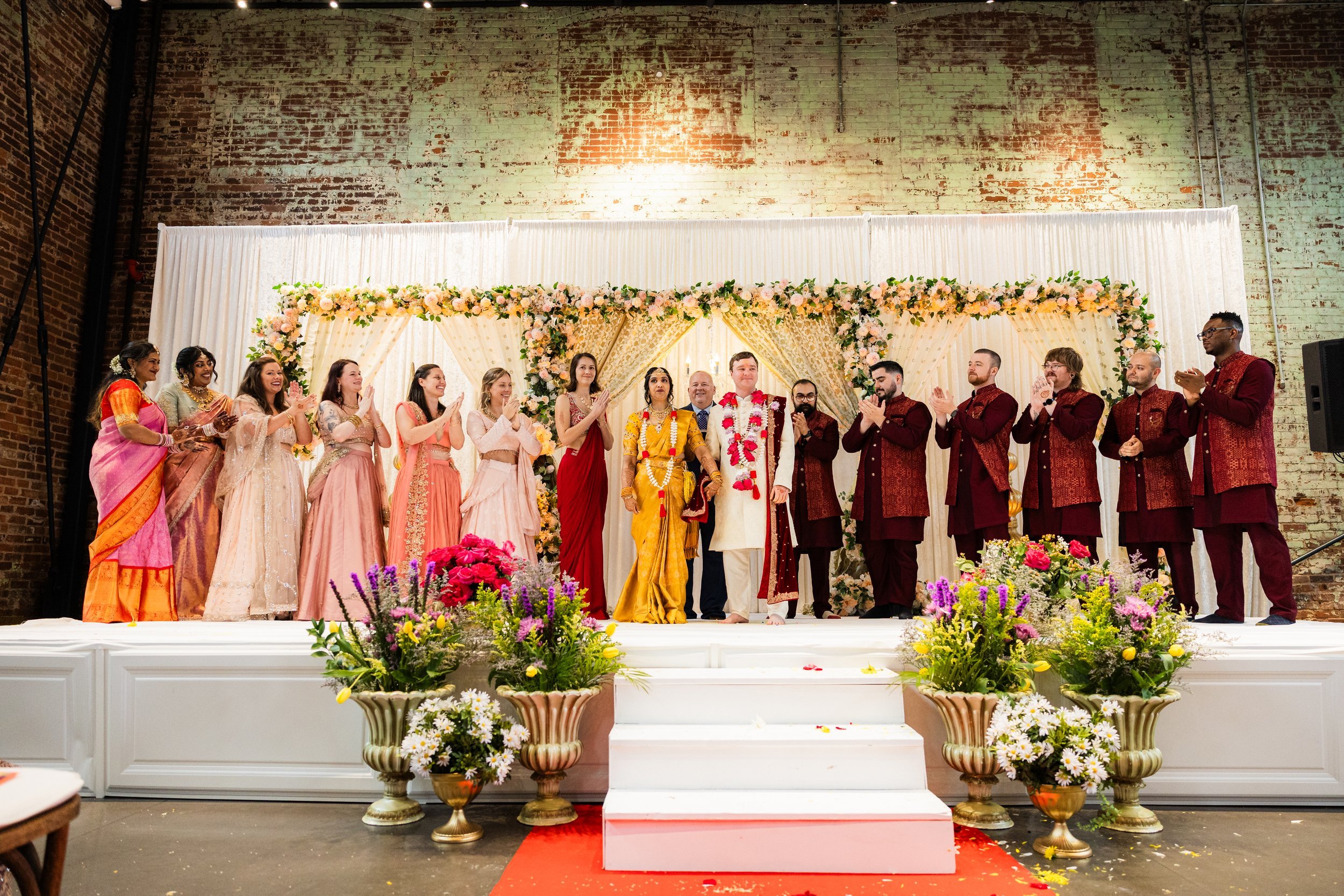
This is the part I think a lot of fusion couples will love. Once the Hindu ceremony ended, Harini and Allan held a second, shorter ceremony on the same mandap for Allan's side of the family. Full wedding party lined up across the stage, an officiant, personal vows, and rings. Allan read his vows off his phone, and his mom was laughing and wiping her eyes at the same time. Same couple, same day, same flowers. Two traditions, both honored, nobody had to choose.
If you're thinking about doing both, here's what I'd tell you:
Keep them close together. Doing the second ceremony right after the first meant nobody had to leave, change, or travel. Guests stayed in their seats and the energy stayed up.
Let the wedding party stand for the second one. It gave Allan's side a moment that felt familiar to them, and it gave the bridesmaids and groomsmen something to do besides sit in the front row.
Plan your outfits on purpose. Harini stayed in her saree for both ceremonies, then changed into a lilac lehenga for the reception. Allan went from a sherwani to a tux. Two ceremonies don't have to mean four outfit changes.
Family photos: plan for a lot of family
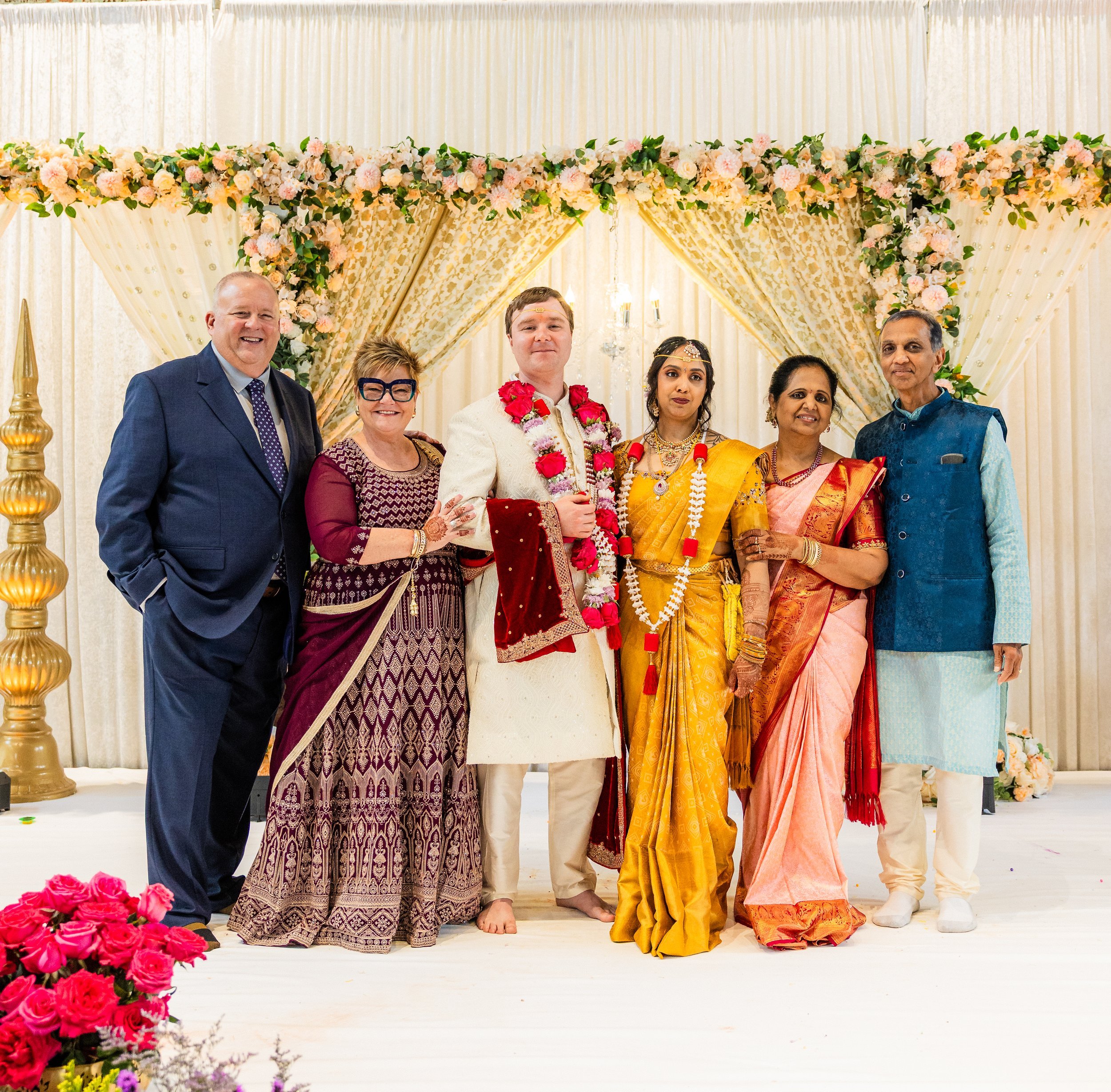
After the ceremonies we did family photos, and I mean a lot of family photos. Aunties, uncles, cousins, grandparents, family friends who are basically family, both sides together and then each side on its own. We went through dozens of groups.
This is the single biggest planning tip I have for an Indian wedding. Make your family photo list before the wedding, and assign one person from each side who knows everybody. Without that, family photos turn into fifty people standing around wondering whose turn it is. With it, they move fast and nobody gets missed. I send every couple a shot list tool for exactly this reason.
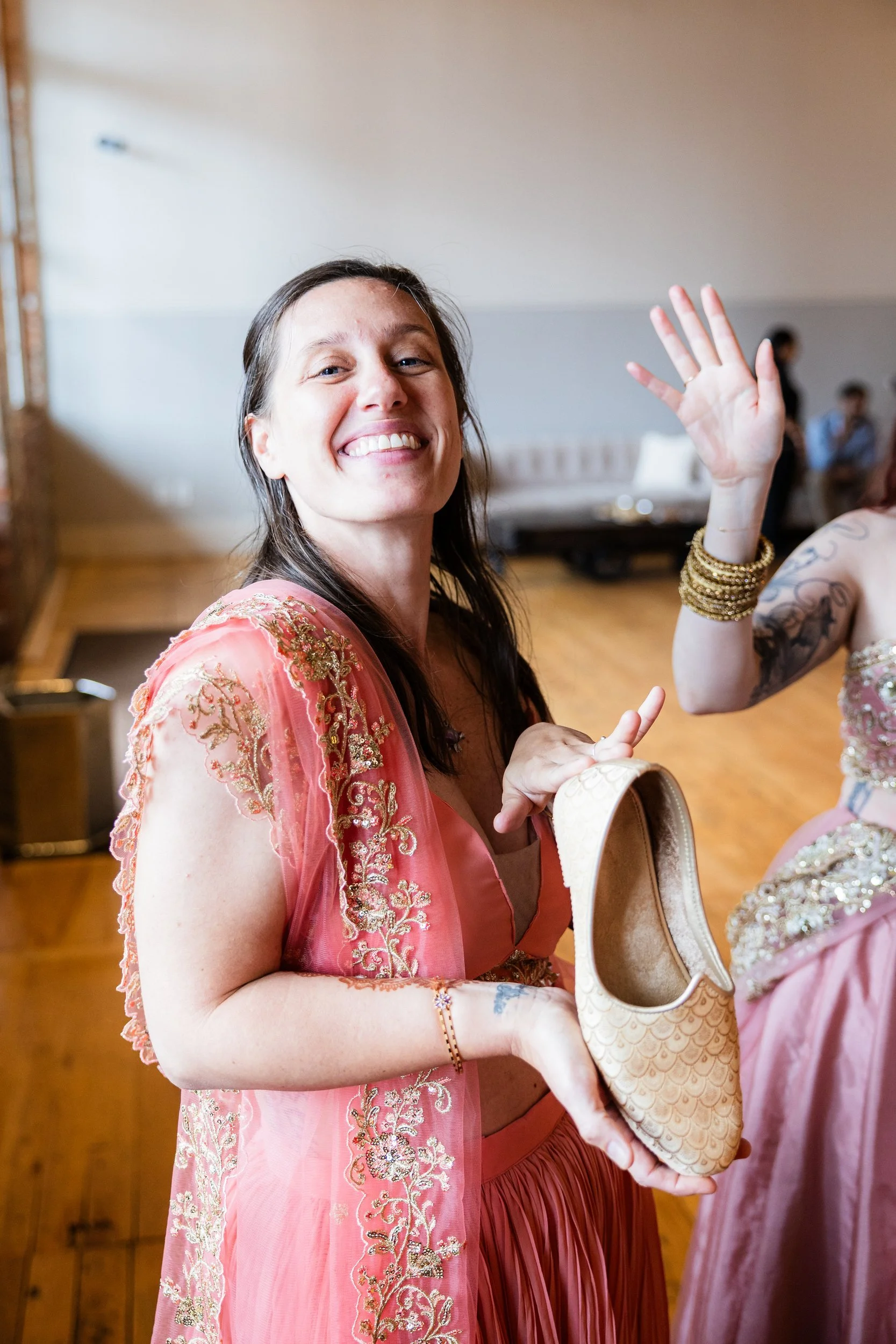
Also, someone stole Allan's shoes. That's tradition, too. Harini's friends hid them during the ceremony and made him pay to get them back, and the negotiation was loud, long, and very much in their favor.
A break in the afternoon
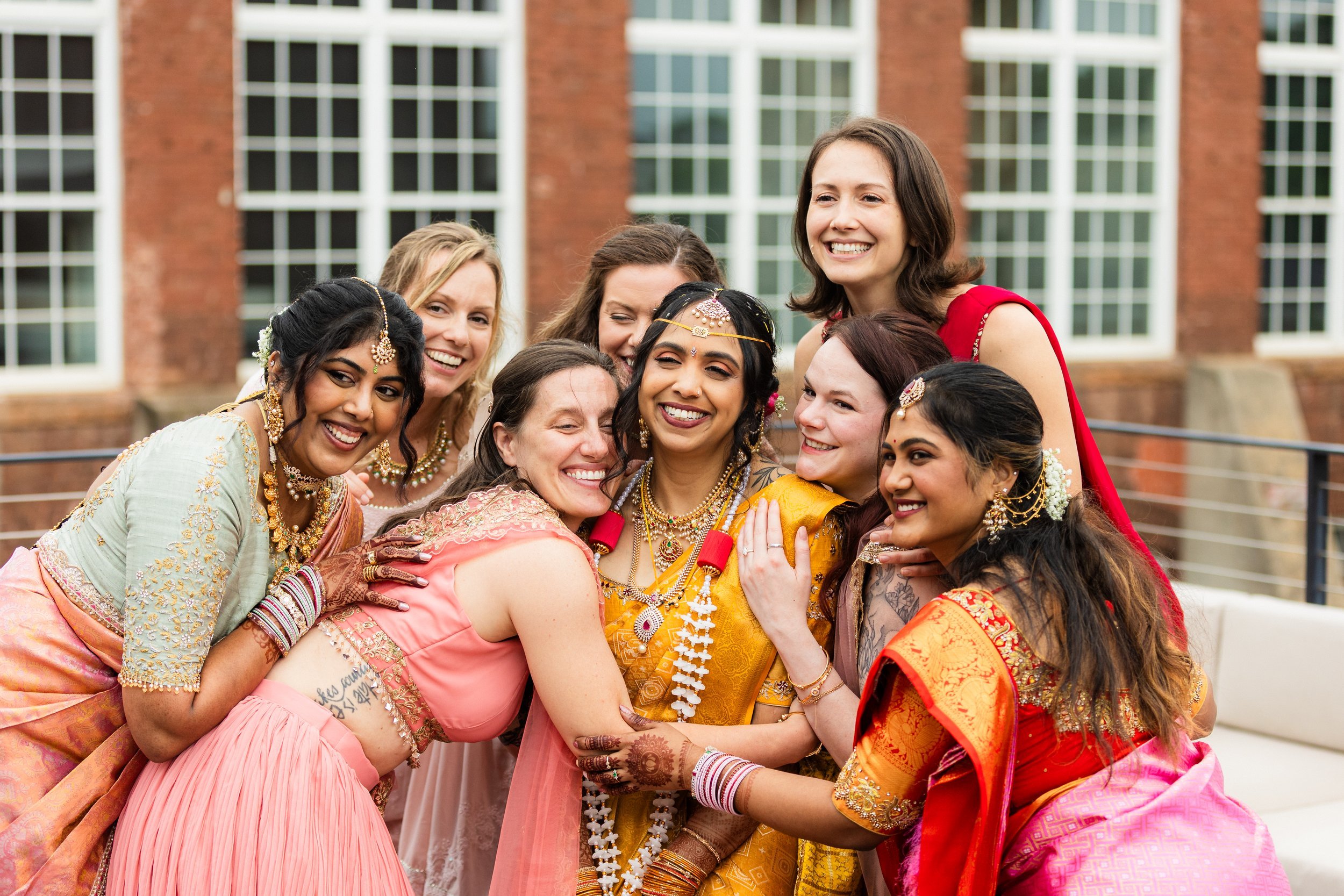
There was a real break between the ceremonies and the reception. Guests went back to their hotels, the couple got to breathe, and the venue got flipped for the evening. Before everyone left, Harini grabbed her girls for photos up on the rooftop, and they spent fifteen minutes laughing with the old mill windows behind them.
If your ceremony is in the morning and your reception is at night, embrace the gap. Don't try to fill it. Your guests need a nap and so do you.
The reception
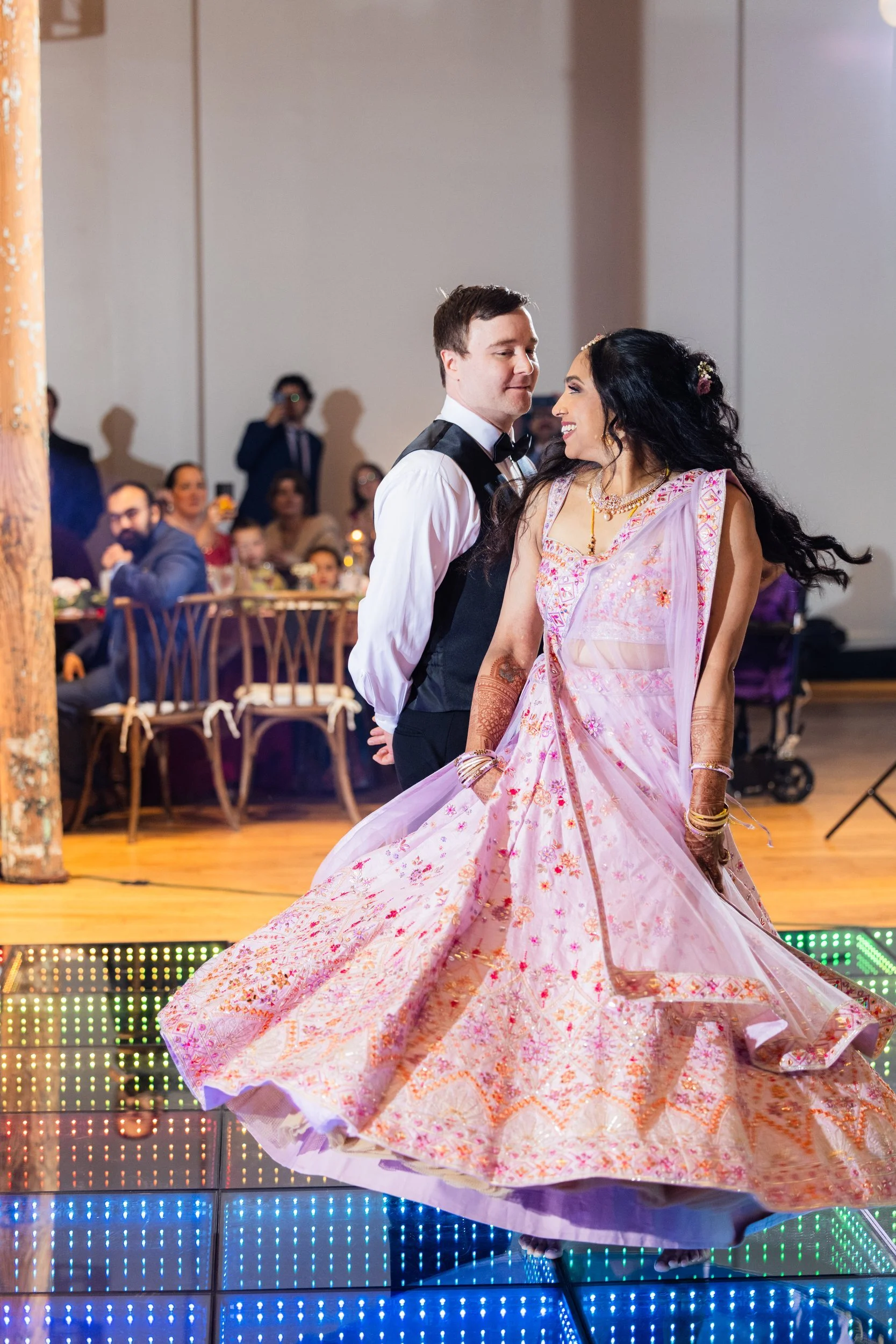
The reception started with the two of them alone on the rooftop. Harini in her lilac lehenga, Allan in a tux, nobody else around. She spun her skirt out because she couldn't help it. He kept making her laugh. Those ten minutes were the calmest of their whole day, and I think the photos show it.
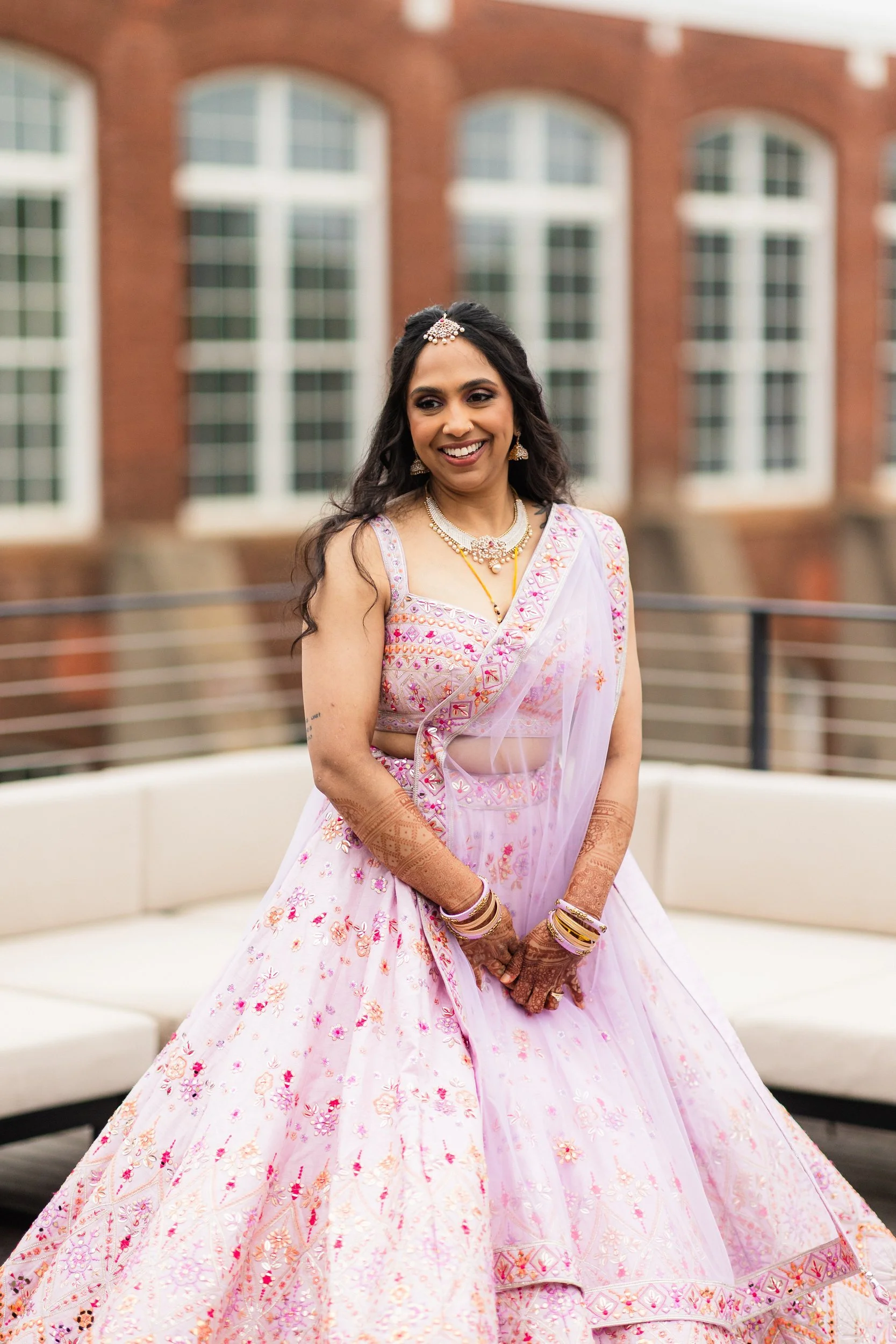
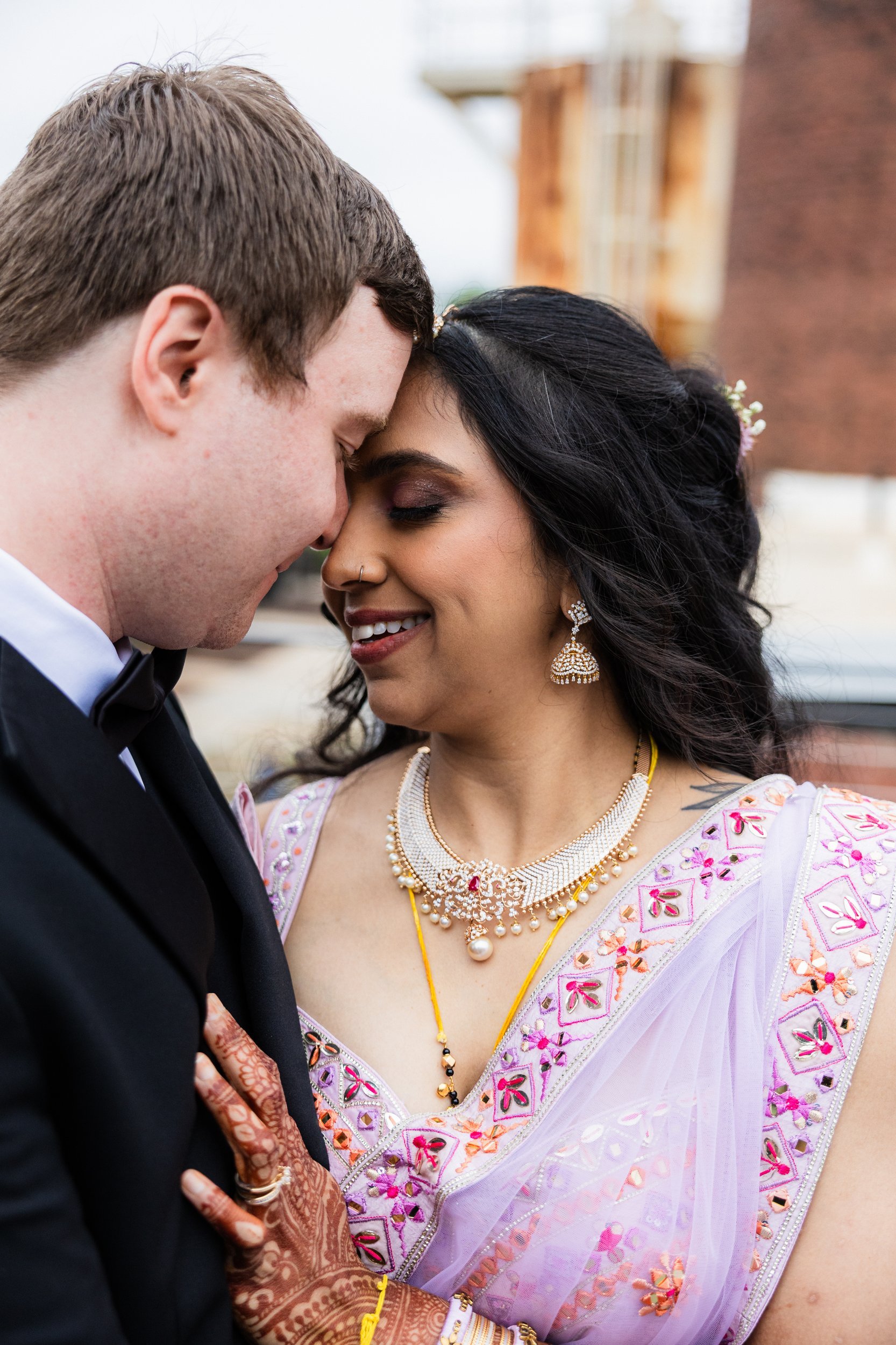
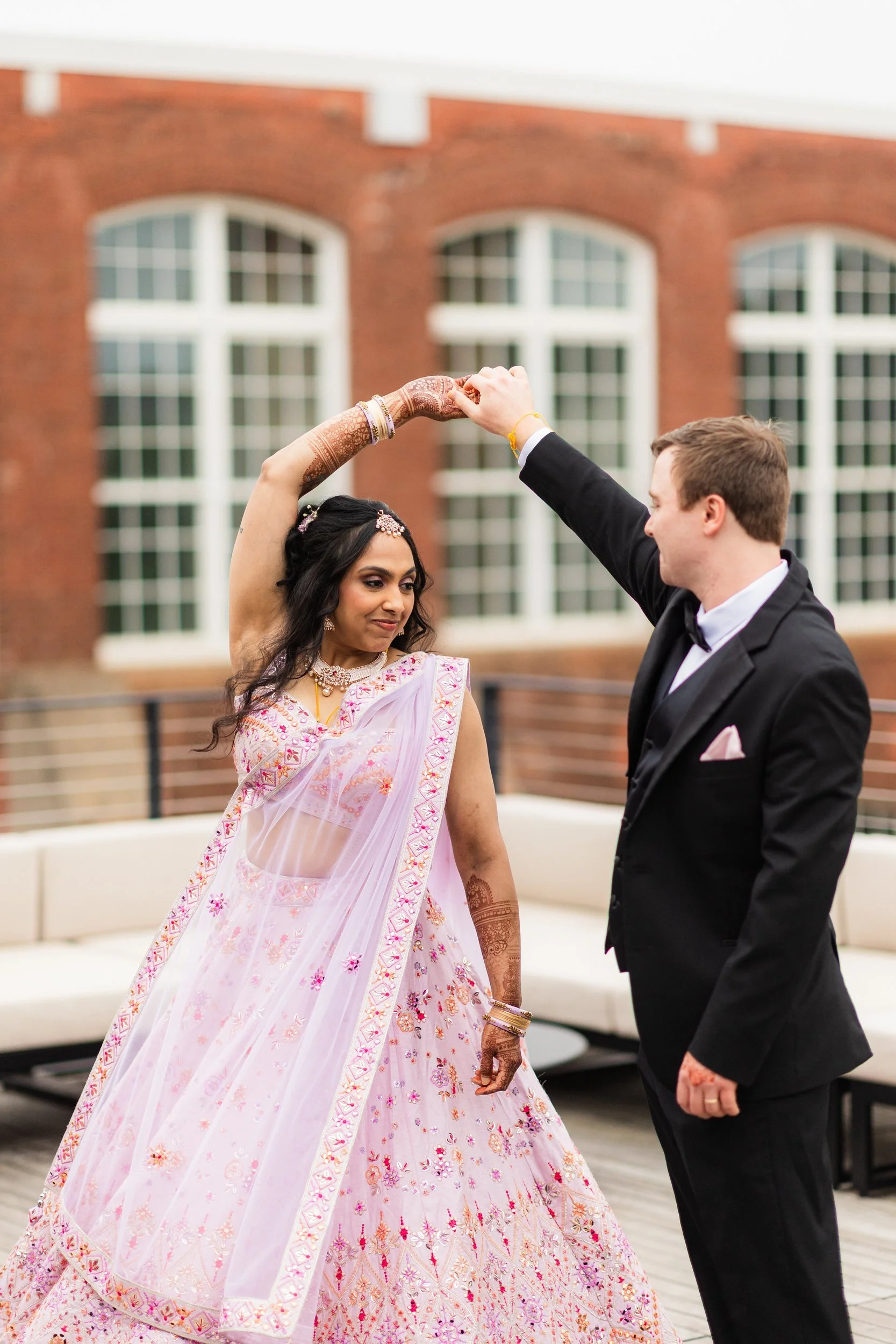
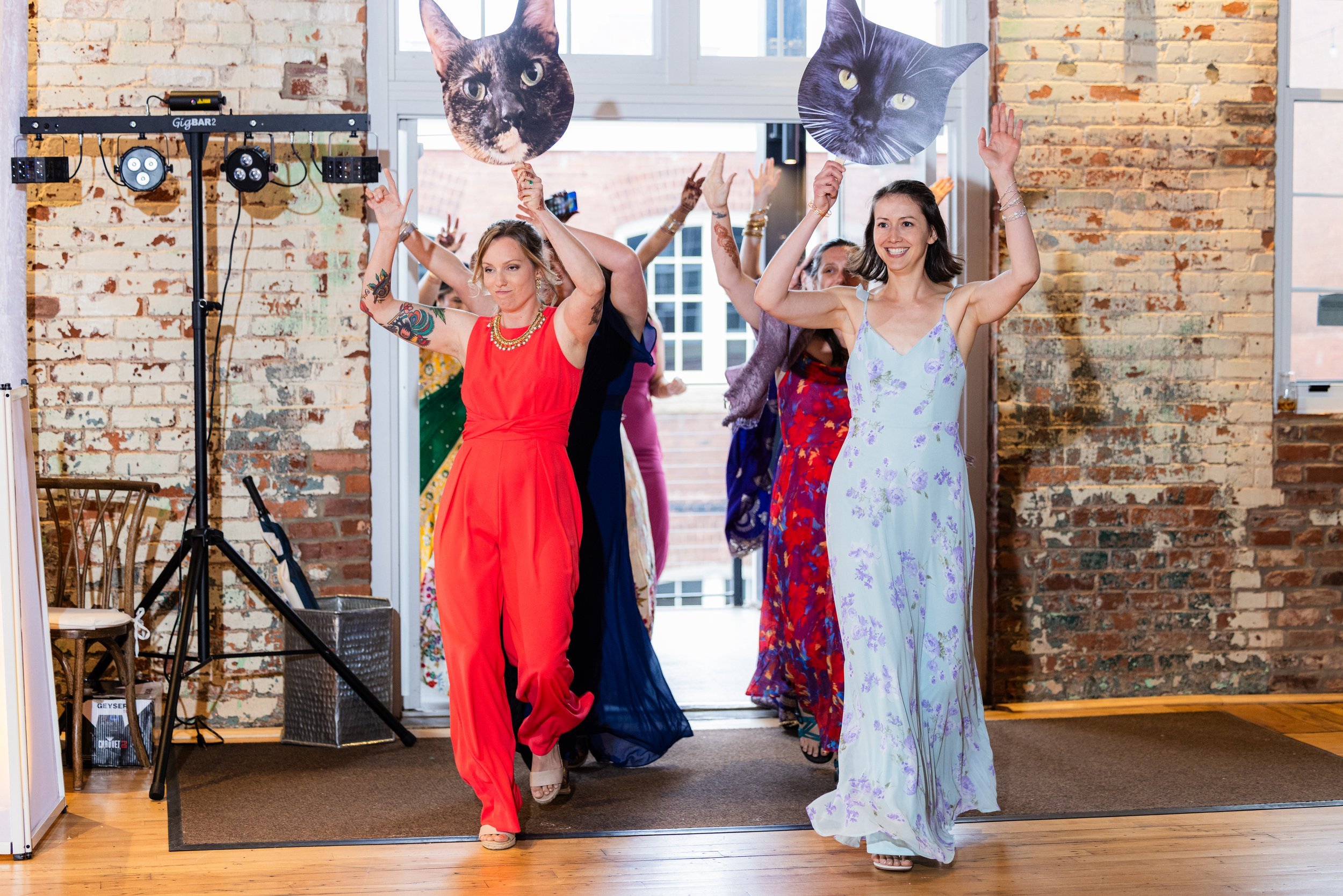
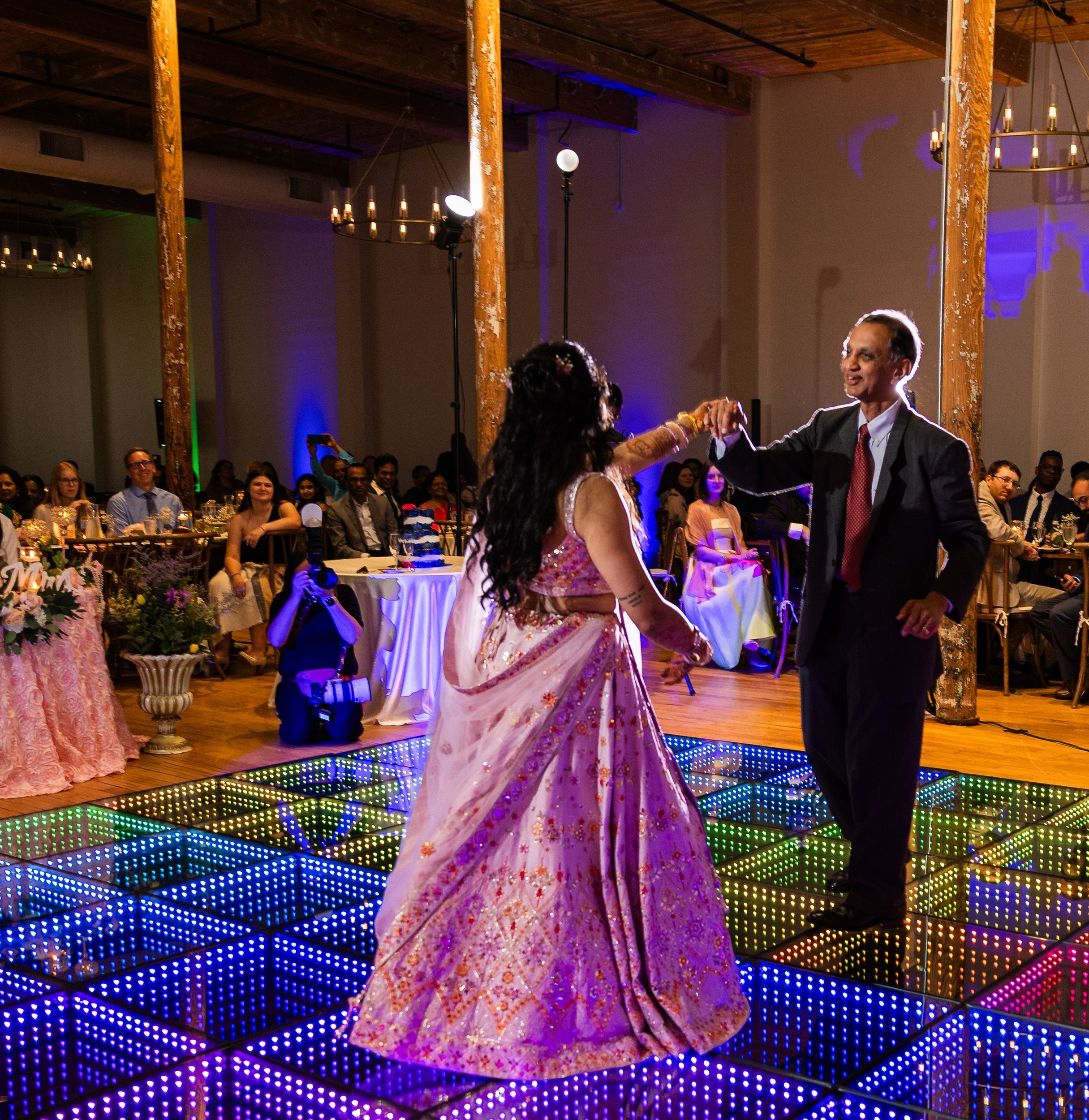
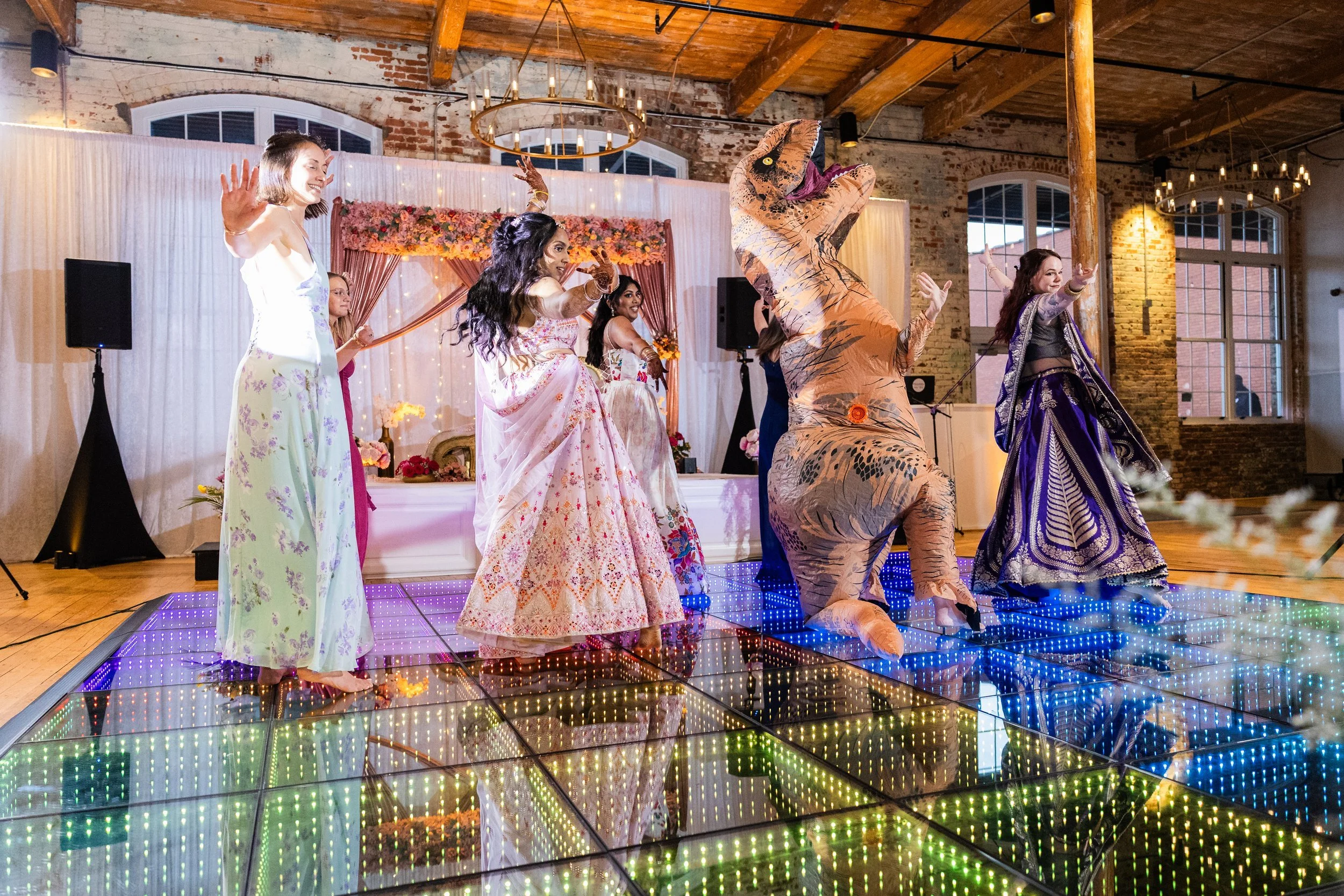
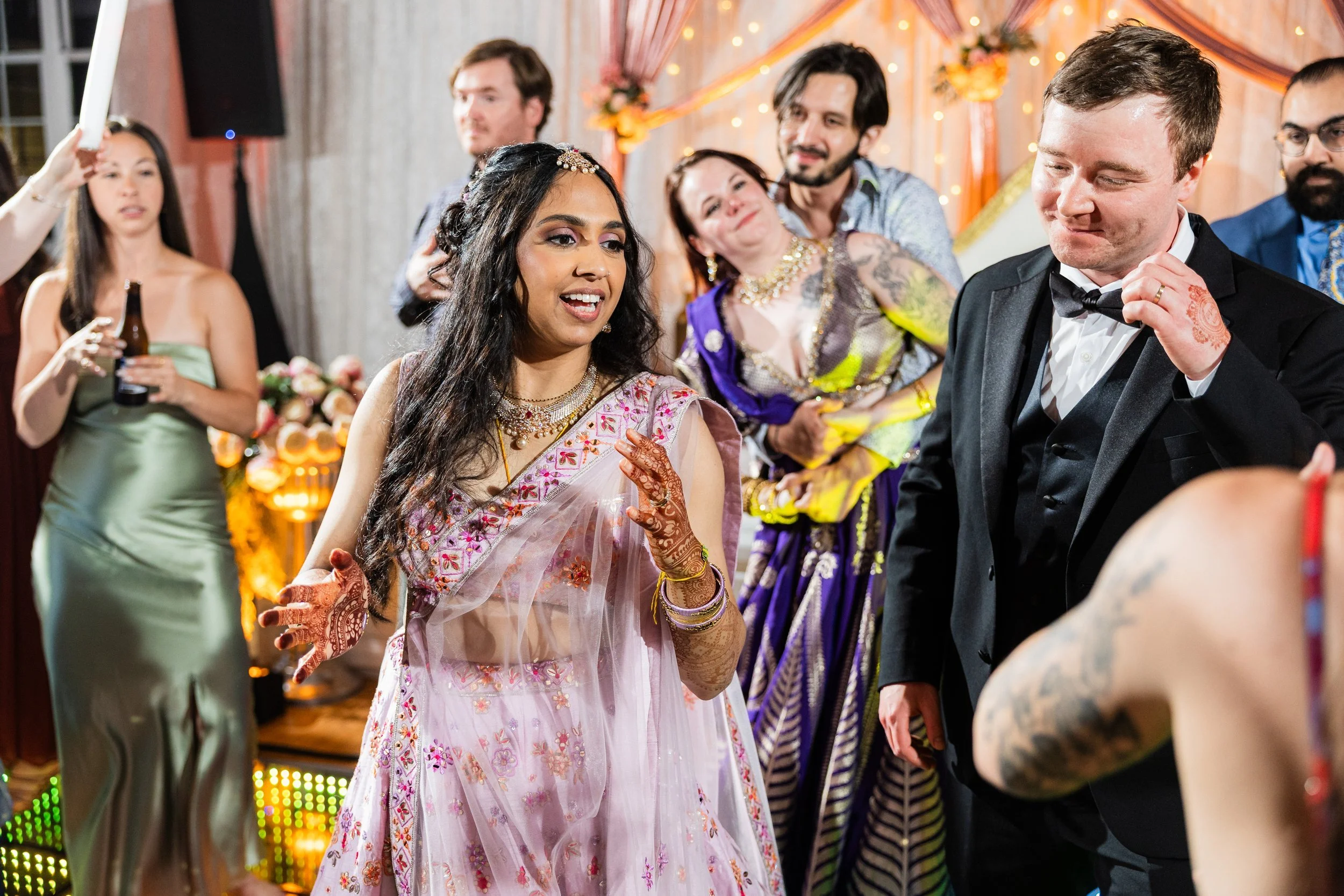
Then it was a party. Their bridal party ran into the room holding up giant cutouts of their cats' faces, which tells you everything about these two. Their first dance happened on a lit up glass dance floor, and then Harini danced with her dad. Their friends put together a choreographed dance, and halfway through, someone in an inflatable T. rex costume joined in and nobody missed a step.
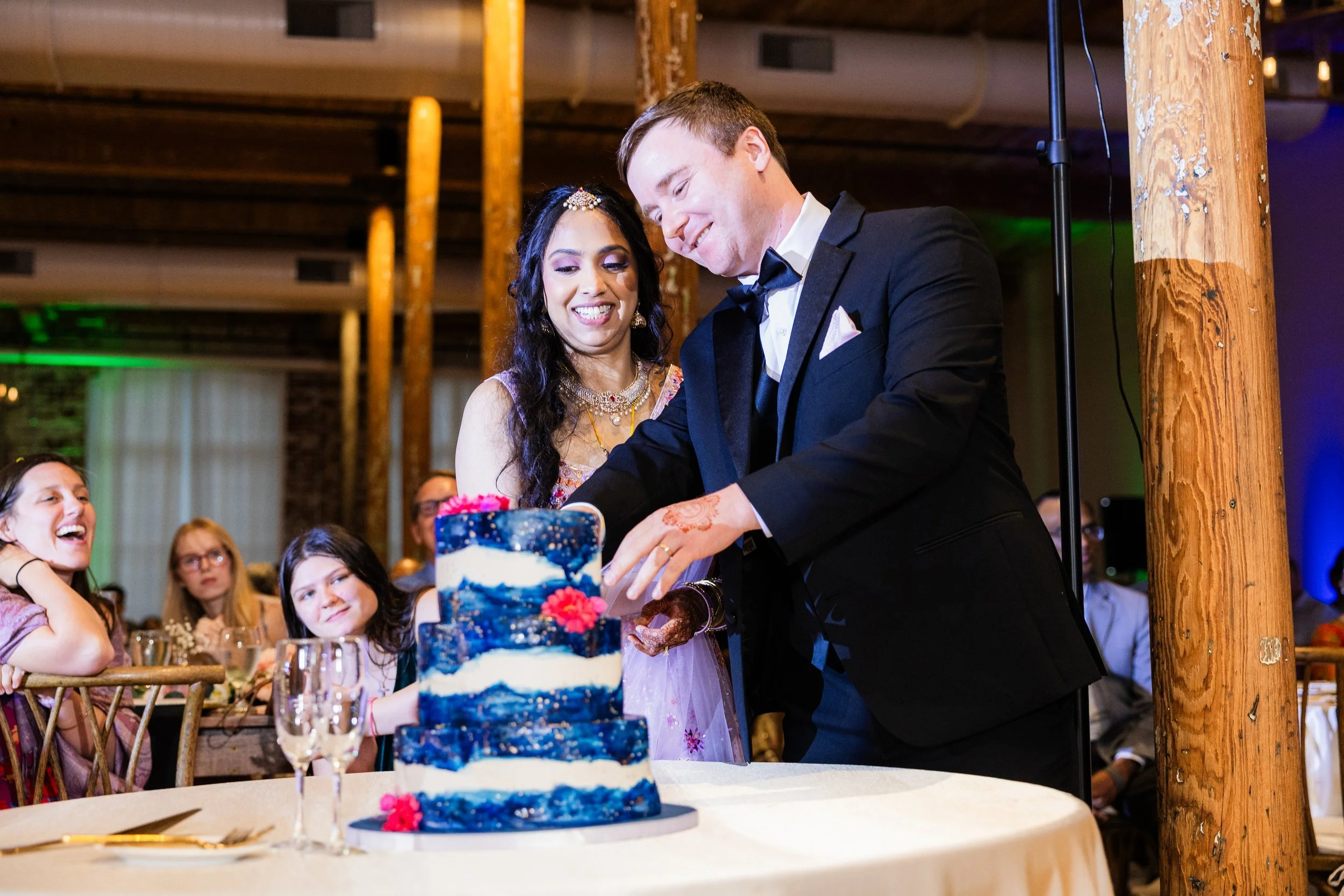
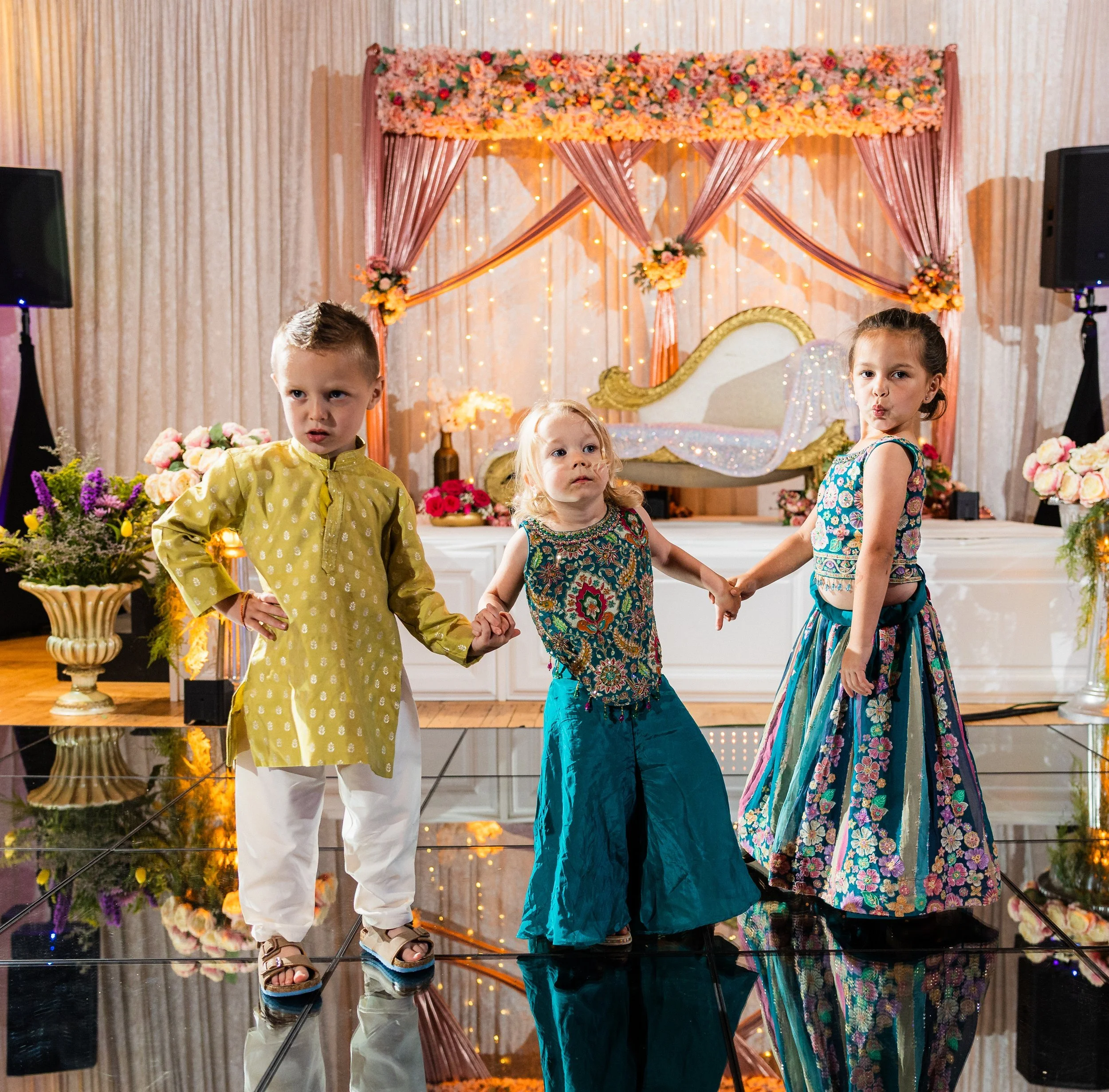
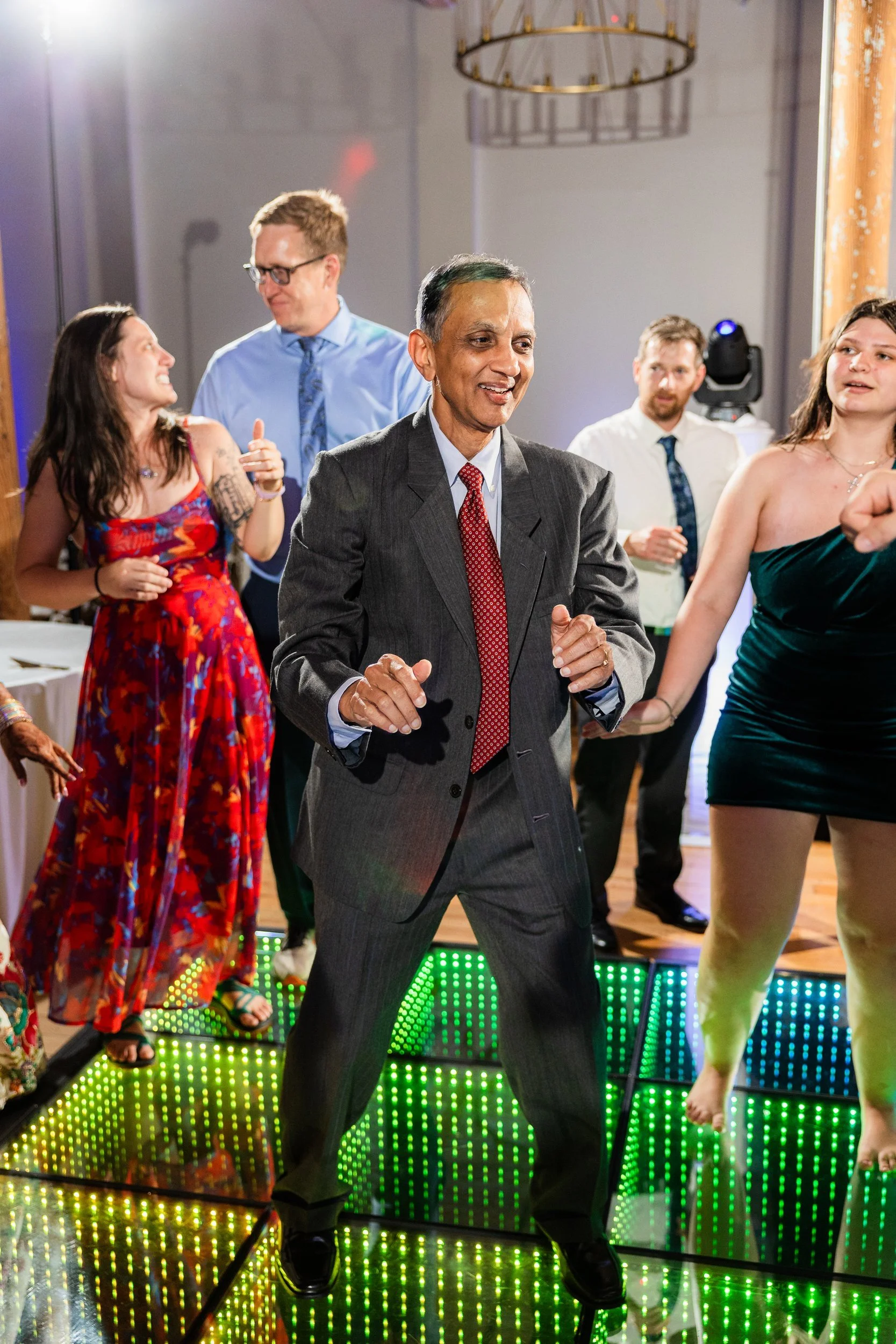
There were toasts from both families. There was a cake. There were grandparents, little kids in tiny lehengas and kurtas, and both families on the dance floor until the end of the night. By the last song I couldn't tell anymore who was from which side. Which I think was kind of the whole point.
Planning your own Indian wedding in Greenville
Here's what I'd tell a friend:
Book your priest early and loop them in with your planner. Your priest runs your ceremony, not your venue and not me. Make sure they know your muhurtham, your timeline, and any fusion elements before the day.
Put a program on every chair. A one page guide to the rituals makes your guests feel included instead of lost.
Pick a venue that can handle a big guest list and a big stage. Indian weddings tend to run large. You need room for the mandap, room for everyone to see it, and a plan for the baraat.
Plan for more photography time than a typical wedding. A baraat, a full ceremony, a second ceremony, a long list of family photos, and an evening reception is a lot of day. Harini and Allan had full coverage from early morning to the last song, and we needed every hour of it. If you're trying to figure out how much you need, I wrote about how many hours of wedding photography you actually need.
Have someone in charge of family photos from each side. I'll run the list. They'll know which auntie is which.
Leave room for the chaos. The garland lift, the shoe stealing, the rice in everybody's hair. Those aren't interruptions to your wedding. Those are your wedding.
And if you're feeling nervous about being in front of a camera all day, I promise you're not the first. Most of my couples feel the same way. I wrote about what to do if you're camera shy, and the short version is that you don't need to perform. You just need to be there.
FAQ: Indian weddings in Greenville, SC
How long does a Hindu wedding ceremony usually take? It depends on your family's traditions and your priest, but plan on somewhere between one and three hours. Harini and Allan's Hindu ceremony, including the baraat, filled most of the morning.
Can you have a Hindu ceremony and a Western ceremony on the same day? Yes. Harini and Allan did their Hindu ceremony first, then a shorter Western ceremony with vows and rings on the same stage right after. Keeping them back to back meant guests didn't have to move.
What is a muhurtham? It's the auspicious time chosen for the moment of marriage, usually by your family and priest. Many Hindu weddings build the whole day around it, which is why some ceremonies happen in the morning.
Do Indian weddings need more photography coverage? Usually, yes. Between getting ready, the baraat, the ceremony, family photos, and the reception, Indian weddings often run longer and have more events than a typical wedding day. Talk to your photographer about full day coverage and whether you need a second shooter.
What should I look for in an Indian wedding photographer in Greenville? Look for someone who's calm, pays attention, and asks questions about your traditions instead of assuming. You want someone who knows when to stay out of the priest's way and when to move in close, and who will treat your family photos like they matter. Because they do.