
No, it doesn't have to show. Most couples who say they're awkward in front of a camera are really awkward when they're told to pose. Give them something real to do, someone they love to look at, and a photographer who keeps talking, and the stiffness goes away a lot faster than they expect.
I hear some version of this on almost every first call. "Just so you know, we're really awkward." "I hate my smile." "I never know what to do with my hands." If that's you, you're in good company. Most of the people I photograph would rather be anywhere but in front of a lens.
Here's the thing nobody tells you. The best photos from your wedding won't be the ones where you nailed a pose. They'll be the ones where you forgot I was there.
Why you feel awkward in photos (it's not your face)
Most people don't hate how they look. They hate being watched while they try to look a certain way.
Think about what usually happens when someone points a camera at you. "Okay, smile!" So you smile on command, you hold it a second too long, and the photo looks exactly like what it was. A person waiting for a photo to be over.
That's not a you problem. That's a direction problem. And it's the reason I almost never say "smile" on a wedding day.
What it actually looked like at Kendal and Matthew's wedding
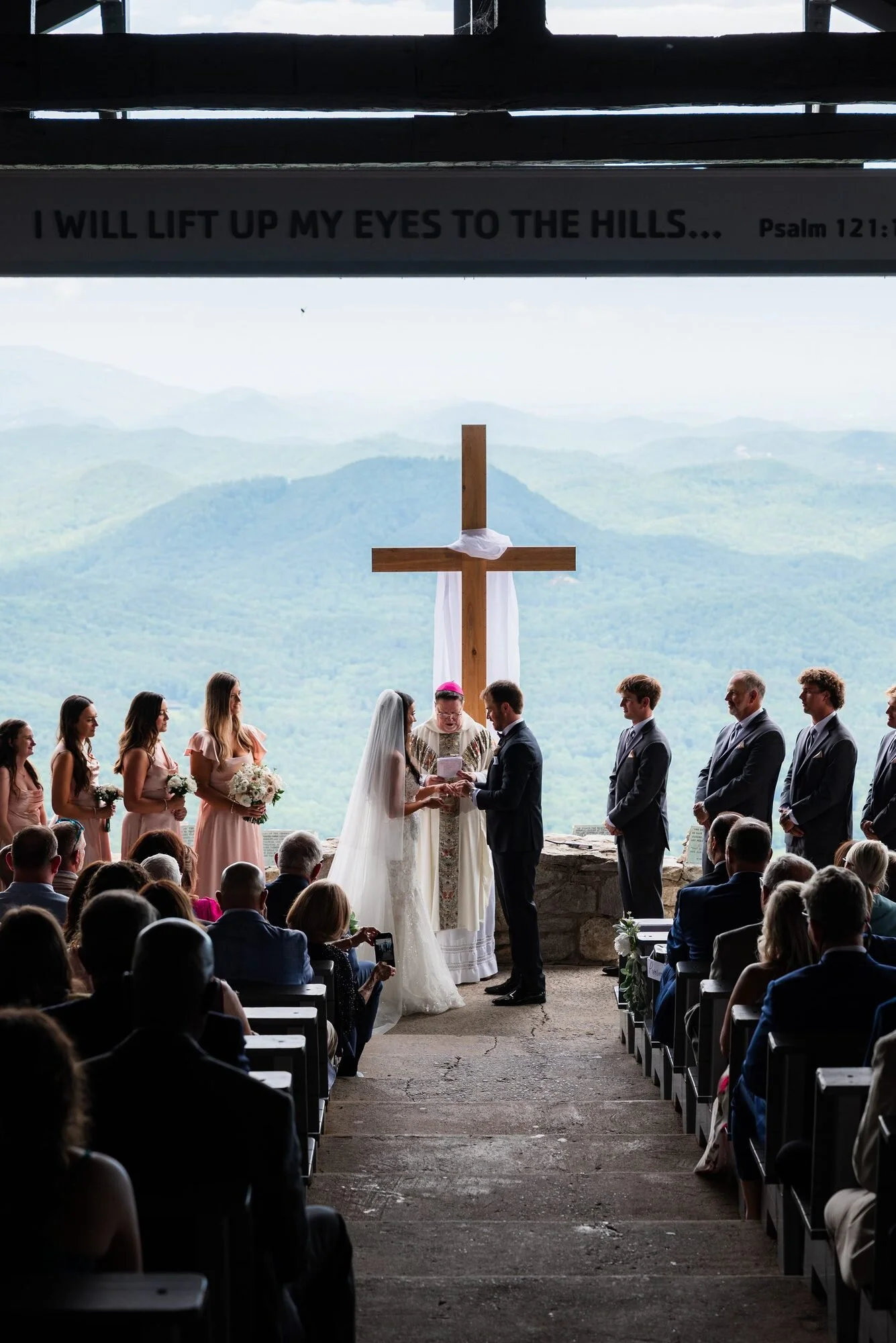
Kendal and Matthew got ready and had their reception at The Westin Poinsett in downtown Greenville, with their ceremony up the mountain at Pretty Place Chapel. Almost none of my favorite photos from their day involved anyone looking at the camera.
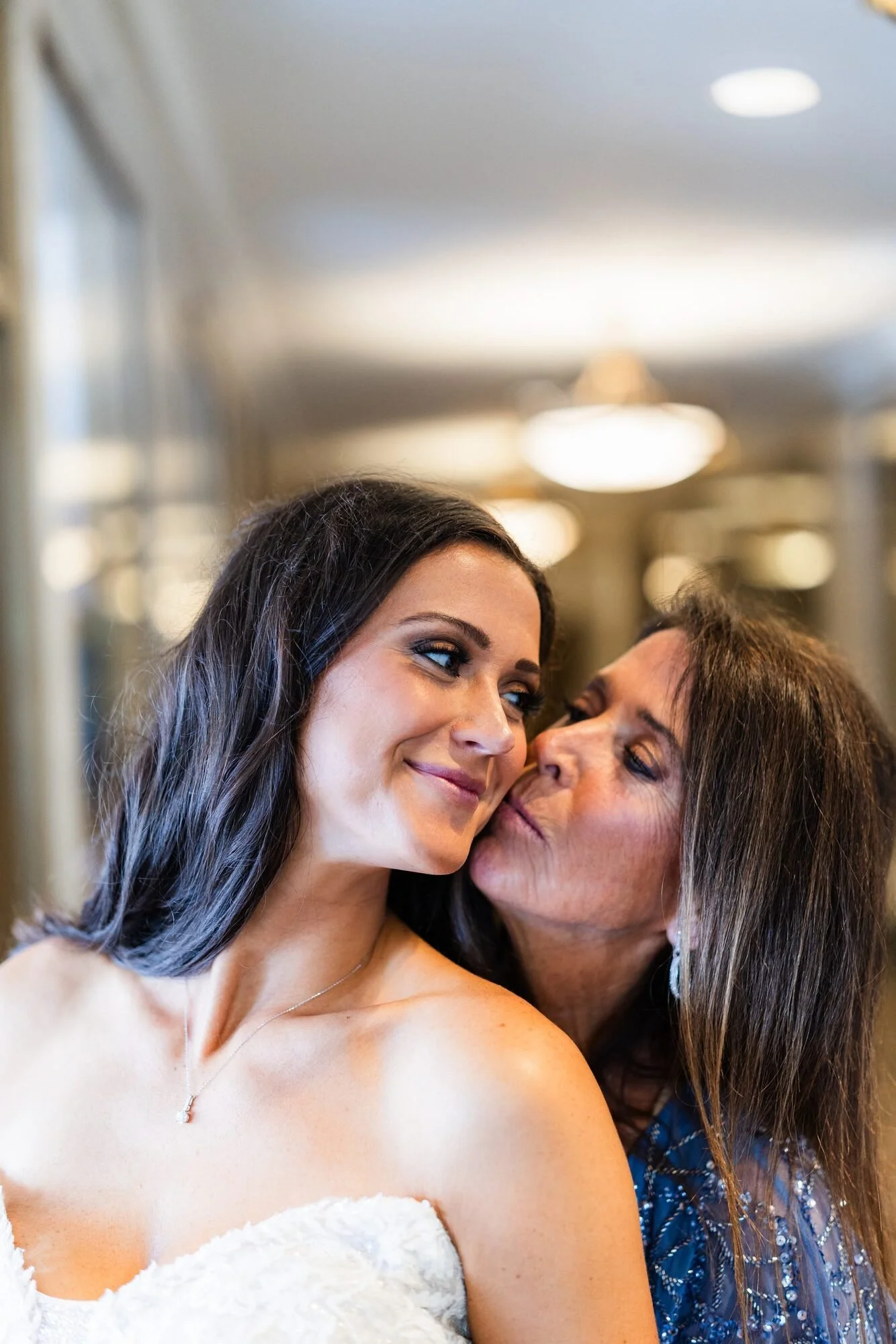
The hallway. Kendal's mom finished the last of her dress and then just leaned in and kissed her on the cheek. Kendal closed her eyes and smiled. Nothing overly posed, just one simple instruction. It's the photo I'd keep if I could only keep one from that morning.
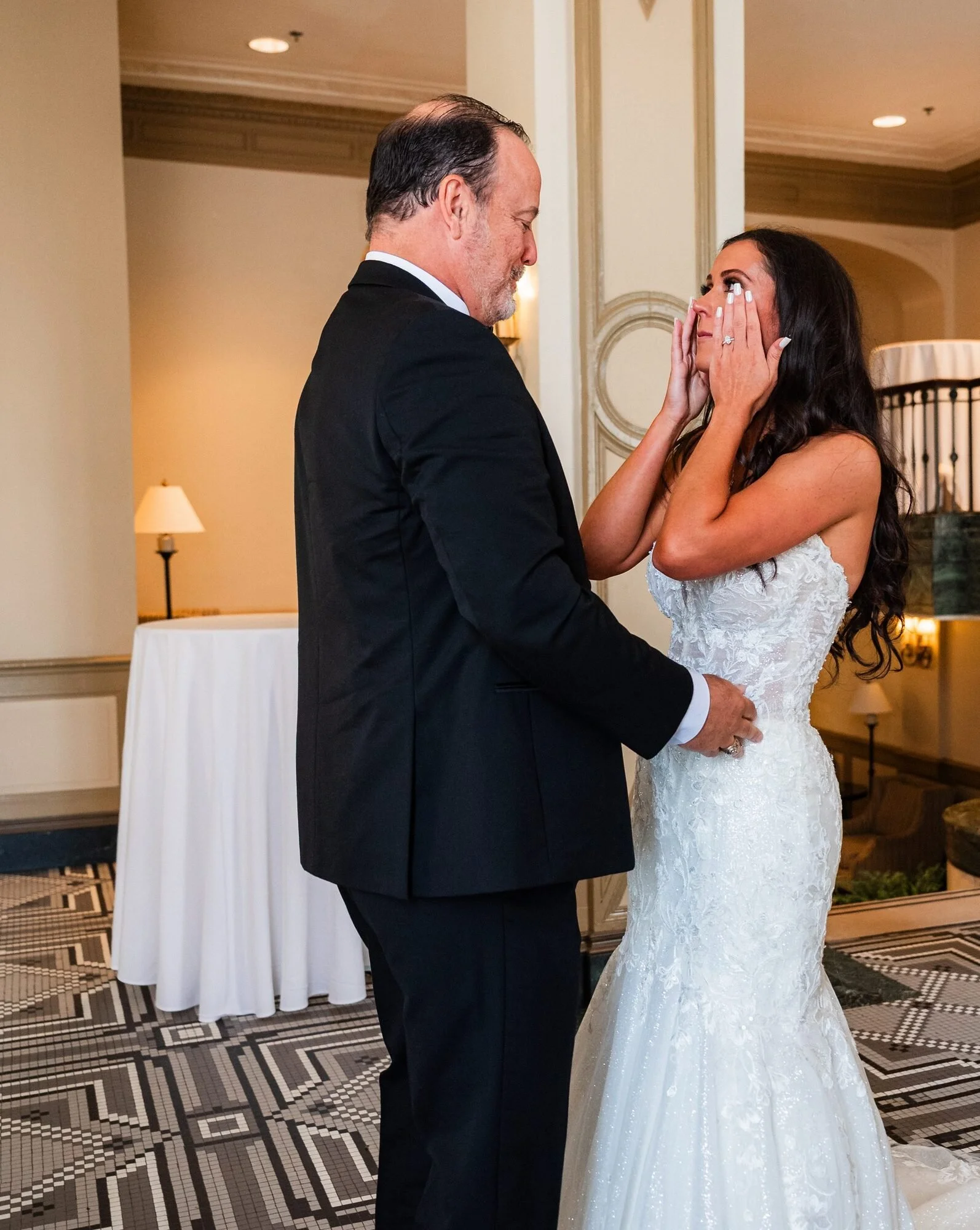
The first look with her dad. He turned around, saw her, and she was wiping her eyes before he'd said a word. I stayed back and let it happen. You can't direct that, and you shouldn't try.
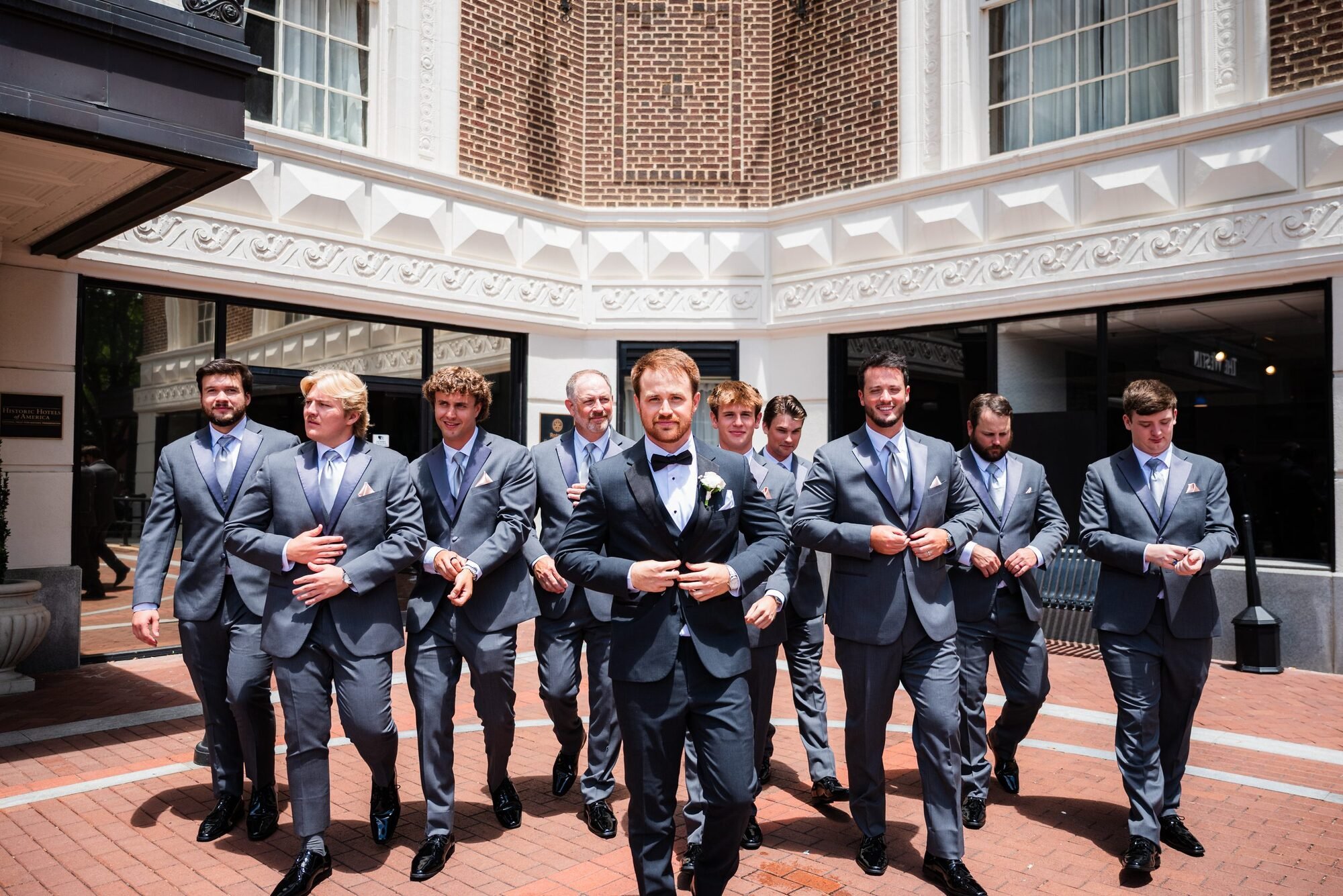
The groomsmen. They were supposed to stand still for a photo out front by the Westin sign. Instead they decided to slow walk like the movie hero. I'll take that trade every time.
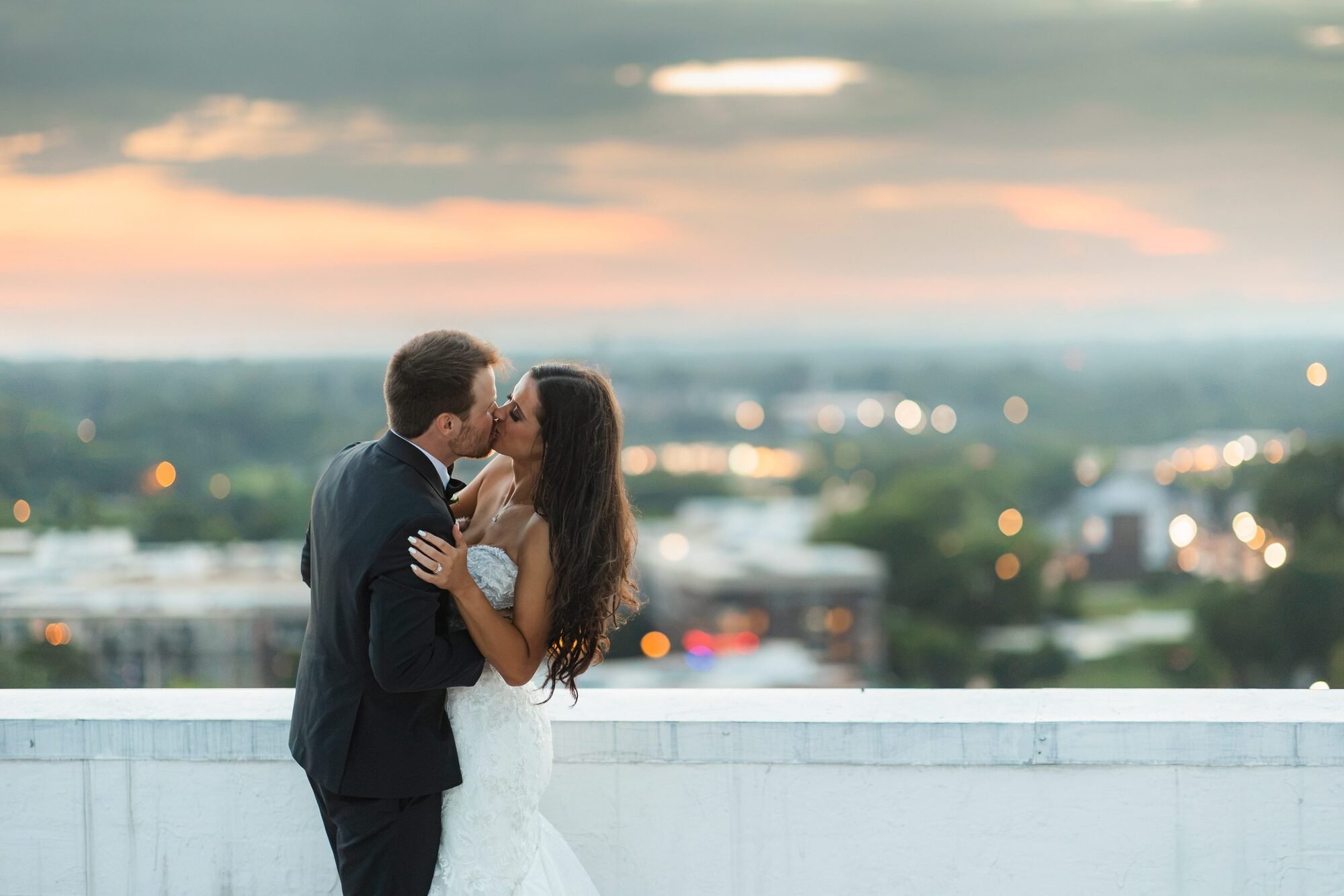
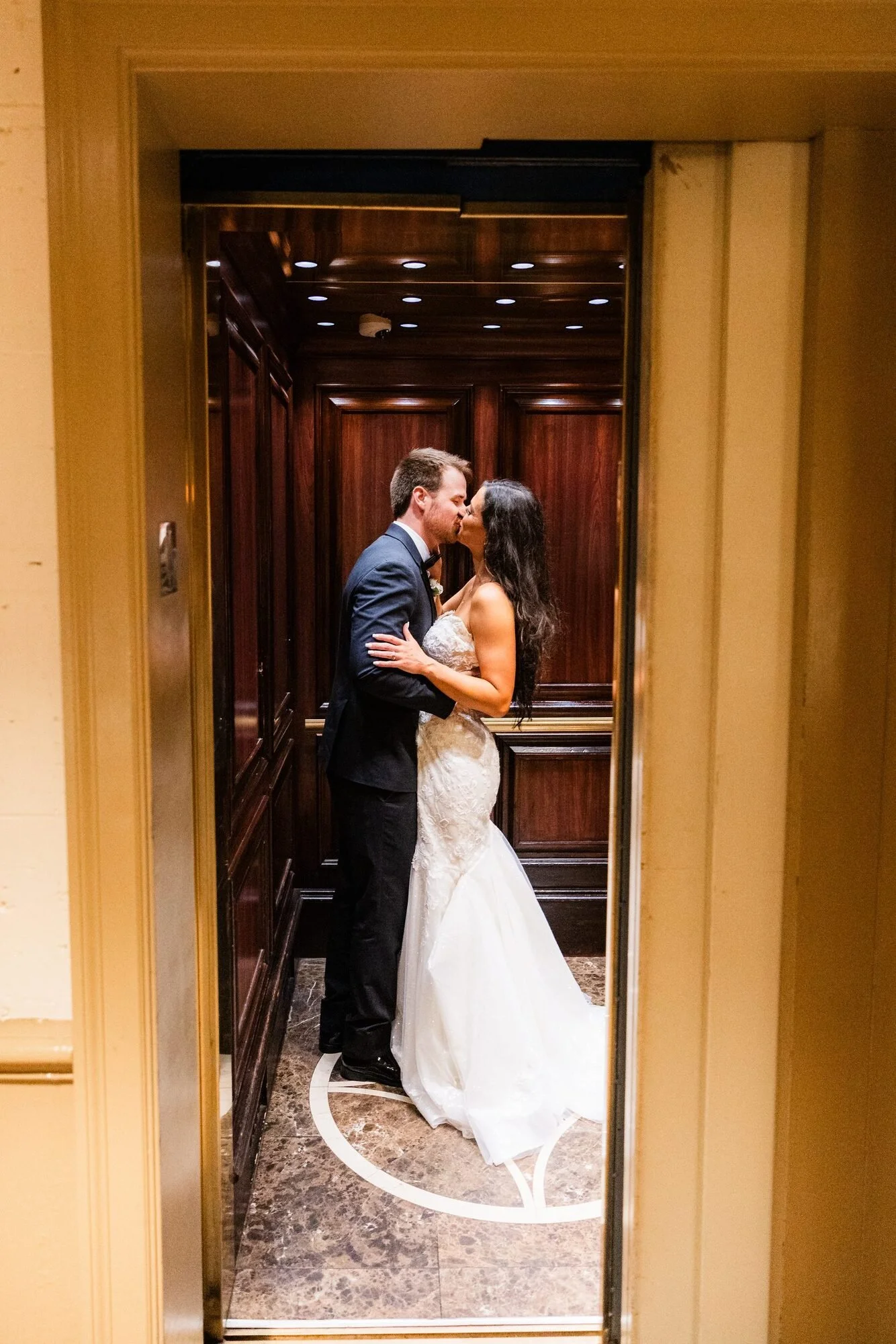
The elevator. During dinner I stole the two of them away for ten minutes on the roof under the Poinsett Hotel sign. On the ride up in the old elevator, they kissed. No prompt. Just two people finally alone for the first time all day.
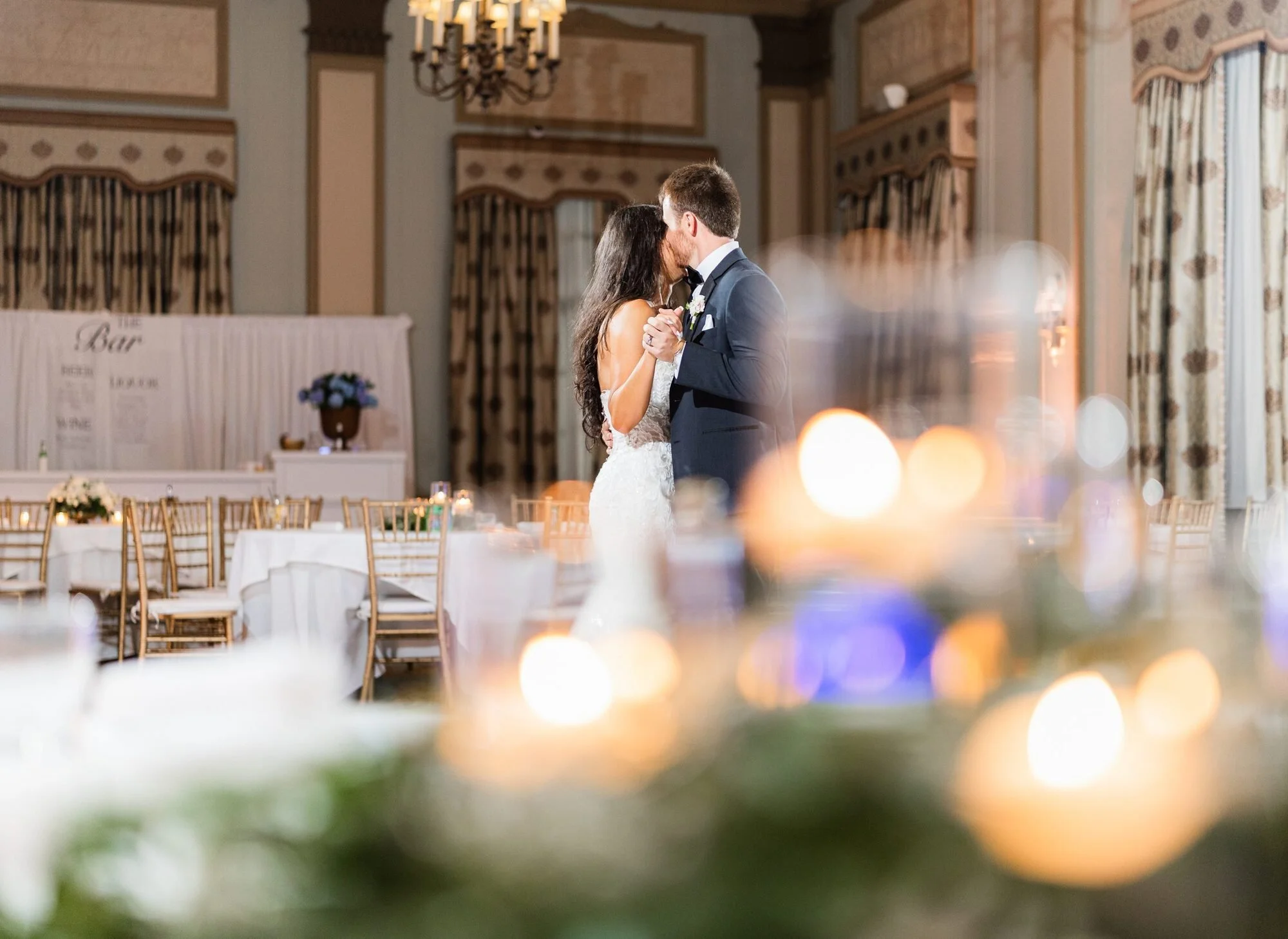
The last dance. Near the end of the night, while everyone else was lining up for the send-off they slipped into a quiet corner for a private last dance. I shot it through the candles on the tables so it would stay theirs.
None of those moments needed a pose. They needed me to pay attention and stay out of the way.
What I do so you don't have to think about it
I give you something to do instead of a pose. Walk toward me and tell each other the worst part of planning this wedding. Whisper what you're having for dinner. Read me the first line of your vows in your worst accent. Your face does the right thing on its own when your brain is busy with something else.
I keep talking. Silence is what makes people freeze. I'll be chatting, joking, and telling you exactly where to go next, so you never stand there wondering what you're supposed to do.
I point you at each other, not at me. Most of your portraits don't need you looking into the lens at all. Looking at your person is a lot easier than looking at a camera.
I keep portraits short. Kendal and Matthew's rooftop photos took ten minutes. Then they went right back to their people. Nobody relaxes when they know they're stuck somewhere for an hour.
What you can do before the wedding
Do an engagement session. Not for the photos, though those are nice. It's practice. By the time the wedding comes, you already know how I talk, you know I'm not going to make you do anything weird, and you've already seen photos of yourself that you like.
Do a hair and makeup trial and look at it in daylight. A lot of camera nerves are really "will I look like me?" nerves. When you've already seen yourself and liked it, you stop checking your face in every reflection on the wedding day.
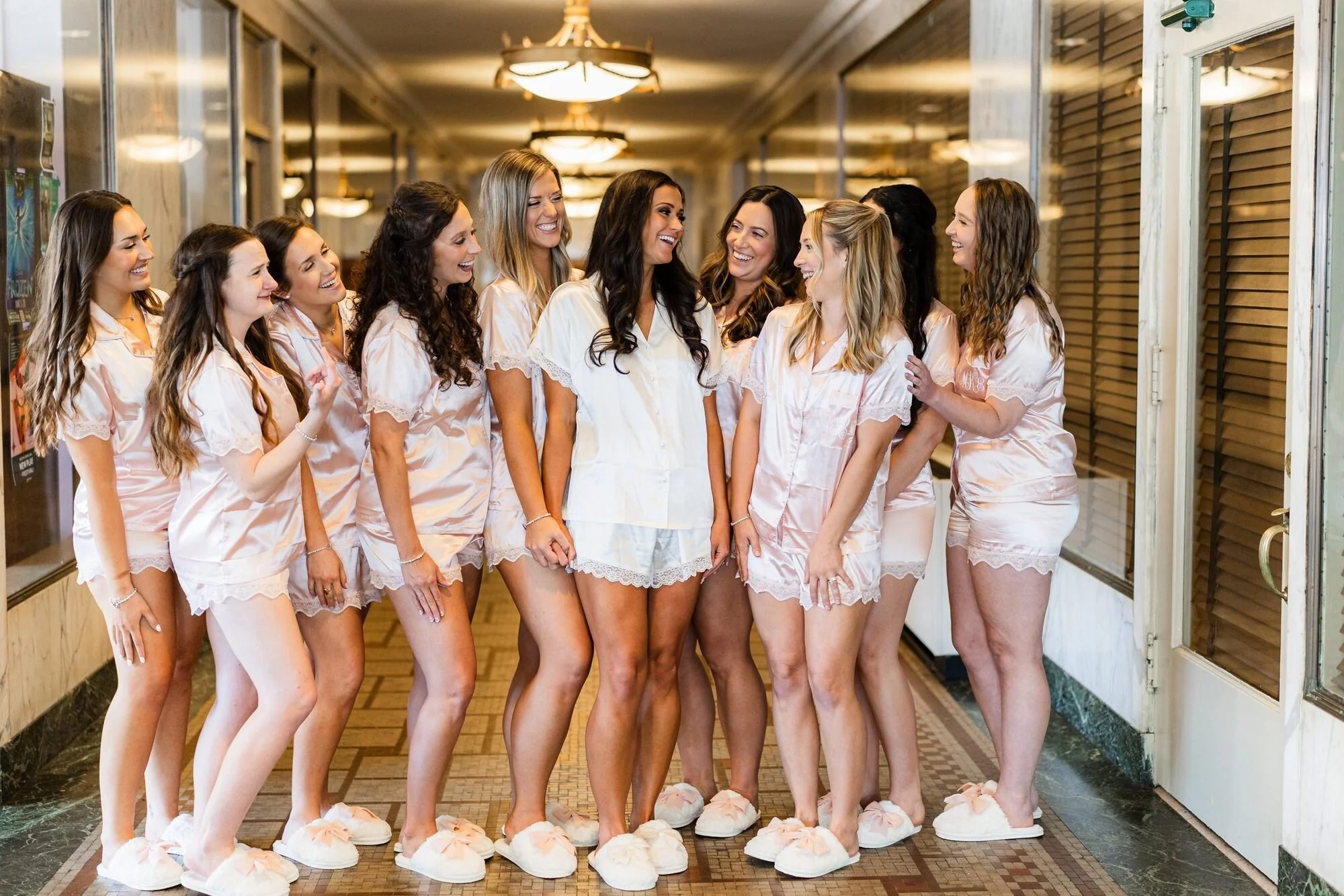
Keep your people close while you're getting ready. Kendal's girls filled the hotel hallway in matching pajamas and laughed so hard I didn't need to say a word. Your loudest friends are your best photo assistants.
Think about a first look. With your partner, a parent, or both. A few private minutes before the ceremony let the nerves come out where nobody's watching, and you walk into the rest of the day a lot lighter.
Why the people around you matter more than the camera
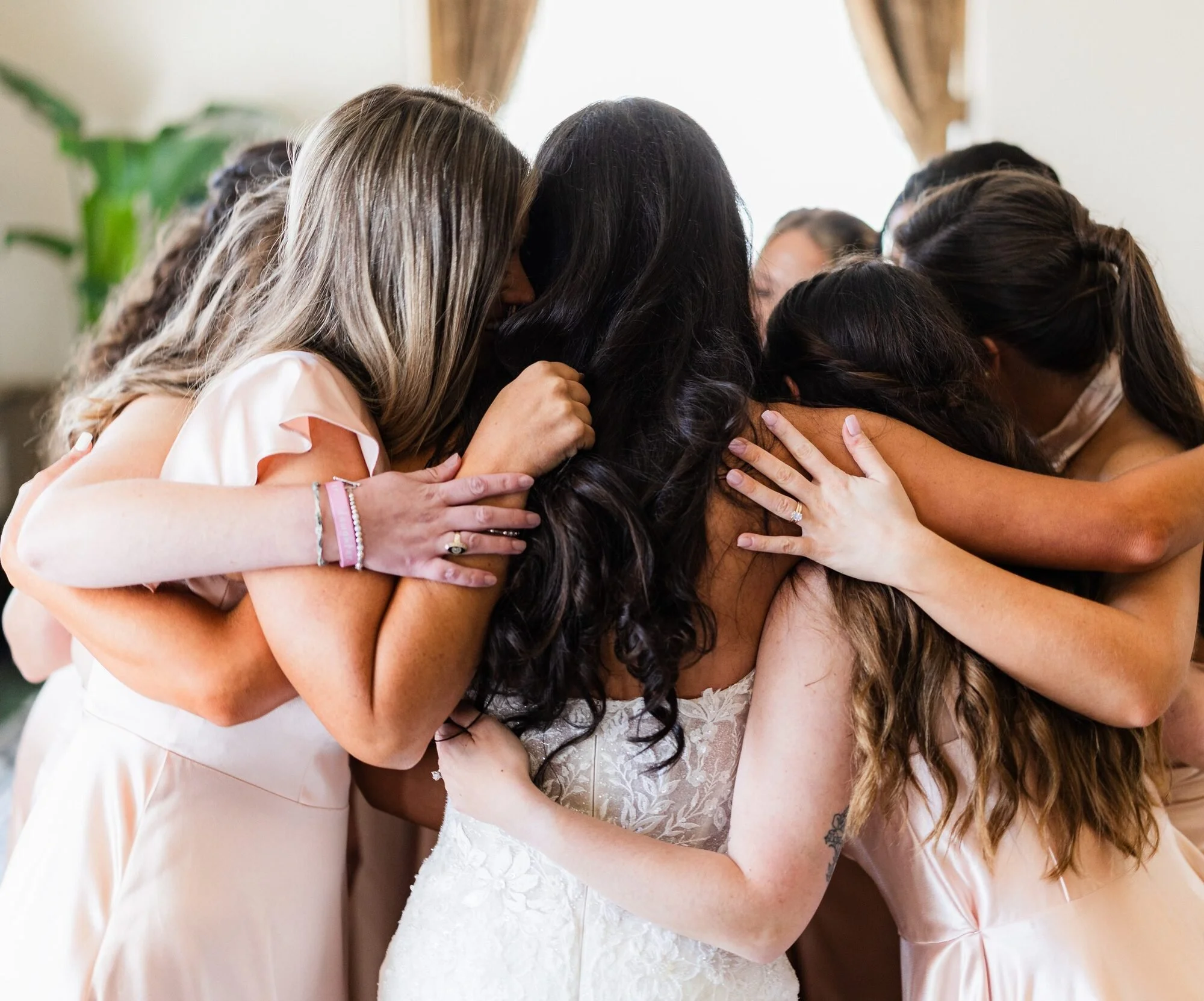
Here's what most camera shy couples miss. How relaxed you look in your photos has a lot less to do with the camera and a lot more to do with how the morning felt and whether you spent the day watching the clock.
Your hair and makeup artist sets the tone. The getting ready hour is the first thing I photograph, and whatever mood is in that room follows you all day. Kendal's hair and makeup came from Bombshell Lounge, and she looked like herself from the hallway at the Poinsett, up the mountain to Pretty Place in late June, and all the way to a sparkler exit on the courtyard that night.
Your coordinator lets you stop watching the clock. Kendal and Matthew's day went from downtown Greenville up to Pretty Place, about an hour each way on a winding mountain road, and back to the Poinsett for the reception. They fit in family photos downtown that morning, a first look with her dad, and ten minutes on the roof during dinner. A day like that only feels easy when someone else is holding the timeline. For Kendal and Matthew, that was Timeless Events. When you're not the one worrying about what's next, it shows on your face.
If you're still deciding how much photo coverage you need for a day like this, I broke it down hour by hour in How Many Hours of Wedding Photography Do You Actually Need?
Frequently asked questions
How do I look natural in wedding photos if I'm camera shy? Choose a photographer who gives you things to do instead of poses, look at your partner instead of the camera, and do an engagement session first so you know what to expect. Most camera shy couples relax within the first ten minutes once they stop trying to pose.
Should I tell my photographer I'm awkward in front of the camera? Yes. Tell them on your first call. A good photographer will change how they direct you, keep portraits shorter, and focus more on candid moments. It's one of the most useful things you can share.
Does an engagement session help with camera anxiety? Yes. It's the best practice you can get. You learn how your photographer works, get comfortable with being photographed together, and see real photos of yourself before the wedding day.
What if I hate my smile? You don't need to smile at the camera for great wedding photos. The photos couples love most are usually laughing, looking at each other, or caught in a moment with family. A real laugh looks completely different from a smile on command.
Does a wedding coordinator help with photos? Yes, more than most couples expect. When a coordinator is keeping the day on schedule, you get the portrait time you planned for and you're not checking the clock, which is a big part of looking relaxed in your photos.
If you've ever said "I just hate pictures of myself," message me. That's honestly who I do my best work with. Tell me what makes you nervous and I'll tell you exactly how I'd handle it.
Featured in this post
Hair and makeup: Bombshell Lounge. Coordination: Timeless Events Planner. Reception Site: The Westin Poinsett. Ceremony: Pretty Place Chapel at YMCA Camp Greenville Photography: J. Richard Photography